

QF_LRA Speedup Heuristics: Design Note#
Historical design/evidence ledger: timings, rankings and source line references
below belong to their recorded revisions. For current routes and qualification,
use Current implementation and qualification; Arithmetic describes retained mechanisms.
SMT engine helpers formerly in check_sat.cpp now live in solver_engines.cpp.
The default-off pure-LRA fixed-elimination policy is distinct from the default-on
dedicated QF_UFLRA setting.
Reverification of the paper profile (2026-10-09)#
The LPAR manuscript’s Primo* uses --lra-model-phase --monotone-elimination.
The original measured binary keeps both options off by default. The qualified
policy at f0fbe67, accepted on 2026-10-10, selects them automatically for
declared QF_LRA rebuild queries with auto preprocessing and adds independent
explicit opt-outs. Later commits update workflows and evidence, with the same
solver sources and tests.
The August measurements and manuscript tables are historical evidence; neither
qualifies the current implementation.
Fresh evaluation compares default, model phase alone, monotone elimination alone,
and both options, using the same binary and resource limits. The two populations
are the complete 1,753-instance non-incremental QF_LRA corpus at 30 seconds and
the official 519-instance SMT-COMP 2026 selection at 1,200 seconds. The latter
manifest is benchmarks/qf-lra-smtcomp2026-selection.txt; its companion JSON
records the source and checksums. It contains the original SMT-LIB inputs,
without competition scrambling. The paper’s 194/325 training/test assignment
has not been recovered, so only the aggregate selected-corpus result is
reproducible from this manifest.
scripts/slurm_lra_profile_comparison.sbatch records timings and input/binary
identities through benchmark_model_replay.py. Submit its benchmark and
replay phases separately; each array task selects a profile and an input
shard. Optional profiles add OpenSMT and Yices reference timings. Resource
limits and exact reference versions must accompany the collected comparison;
cluster hardware differs from the paper’s AMD EPYC machine.
For the automatic-policy candidate, the driver uses explicit opt-outs in its
original four ablation arms and calls the old default legacy-default.
Profile 6 measures the new automatic default with just --quiet. Archived
default-off binaries retain their supported original arguments; detection uses
the measured binary’s CLI help. Replay reads the immutable parent provenance rather than replacing
its arguments with the candidate’s current defaults.
Before broad timing runs, gate the exact candidate flags against reference answers, including generated QF_LRA formulas, real-seed mutation, and existing regression witnesses. Promotion requires a reproducible solved-count/PAR2 gain, an explicit account of losses and family effects, zero untriaged correctness failures, and separate direct Dolmen validation of every successful SAT row for each Primo profile claimed. A QF_LRA gain alone does not justify enabling these flags for QF_LIA or QF_UFLRA. The completed evaluation below qualifies the scoped QF_LRA promotion.
The current opt-in profile passed the focused tests and all 1,000 generated Boolean/arithmetic SAT models with direct Dolmen checks. A separate 3,000-case FuzzSMT answer campaign produced 2,986 reference agreements and 14 timeouts. Strict QF_LRA model replay accepted 1,137 of its 2,603 successful SAT rows; Dolmen rejected the remaining 1,466 inputs’ arithmetic syntax. An explicitly separate replay accepted all 2,603 models with only the validator’s logic broadened to QF_NRA. Assertions and the candidate’s QF_LRA logic were unchanged; this checks model semantics without certifying strict input conformance.
The retained real-seed mutation campaign contains 8,380 inputs: 7,805 independent
reference agreements, 28 resource-only incomplete checks, and 547 invalid
generated inputs (190 nonlinear products and 357 undeclared-name cases).
All 27 candidate rejections with concrete Yices answers were independently
identified as nonlinear inputs by Z3, OpenSMT, and Dolmen. These are generated
input limitations, not accepted model passes. The operator mutation run reached
all 17 families; the two time-boxed TypeFuzz runs each reached seven families.
The dated slurm_lra_paper_seeded_mutation.sbatch,
slurm_lra_paper_mutant_replay.sbatch, slurm_lra_paper_mutant_triage.sbatch,
and slurm_lra_paper_fuzz_semantic_replay.sbatch scripts preserve the workflow.
Their evidence is recorded in docs/run-log.json; separate complete real-corpus
SAT validation remains required before promotion.
The completed 30-second comparison on a single Xeon Gold 6140 host gives:
Profile |
Solved / 1,753 |
Timeouts |
PAR2 sum (s) |
|---|---|---|---|
Previous default |
1,485 |
268 |
20,108.495 |
Model phase |
1,534 |
219 |
16,931.037 |
Monotone elimination |
1,508 |
245 |
18,864.799 |
Both |
1,553 |
200 |
15,923.760 |
OpenSMT 2.9.2 |
1,539 |
214 |
16,800.822 |
Yices 2.7.0 |
1,539 |
214 |
15,408.137 |
Both gains 88 inputs and loses 20 against the previous default, for a net 68
and 20.81% lower PAR2. LassoRanker accounts for most solved-count gains;
latendresse loses four and uart loses two. These are aggregate gains with
real regressions. All 3,711 successful native SAT rows passed separate direct
Dolmen model replay, with unchanged input and binary identities. The
1,200-second comparison below is also complete and independently validated.
Timings use CPU cores on gpu-1, with no GPU allocation;
this host differs from the paper’s EPYC 7513. Subsequent qualification uses
the compute partition, including the selected-corpus model replay,
to avoid occupying GPU-node CPU and memory resources. A new timing comparison
must compare its configurations on matching CPU hardware.
All six 1,200-second timing arms have completed on that same Gold host, with no wrong answers, errors or pairwise reference disagreements. All 1,115 successful native SAT rows passed separate direct Dolmen replay, with complete coverage of all 256 shards and unchanged parent input/binary identities.
Profile |
Solved / 519 |
Timeouts |
PAR2 sum (s) |
|---|---|---|---|
Previous default |
491 |
28 |
84,024.427 |
Model phase |
501 |
18 |
59,825.189 |
Monotone elimination |
498 |
21 |
67,121.127 |
Both |
500 |
19 |
59,868.270 |
OpenSMT 2.9.2 |
498 |
21 |
66,453.004 |
Yices 2.7.0 |
491 |
28 |
83,999.463 |
Both gains 11 inputs and loses two, for nine net solves and 28.75% lower PAR2
against the previous default. Model phase alone solves one more input than both at this cutoff,
with 0.07% lower PAR2. The combined profile therefore does not dominate every
alternative. The manuscript’s corresponding counts were 499 and 504;
absolute reproduction is limited by different hardware, concurrency and
OpenSMT revision. Yices matches the manuscript’s 4f19700f revision.
This run uses original, unscrambled inputs; the manuscript’s exact input
archive is unavailable. Its 194/325 split is the intersection with a
473-instance tuning population, whose manifest has not been recovered.
The manuscript applies a 7 GB limit to all solvers in this experiment;
30 GB describes the actual competition. This run reserves 7 GiB per worker.
Selected-corpus replay was released after all native timing shards and the
candidate’s compute timing stage completed. It ran on compute nodes while
the remaining reference timing shards finished on the Gold host. All new
work is restricted to compute nodes.
Unstarted selected-corpus replay tasks moved to
slurm_lra_selected_model_replay.sbatch: 6 GiB per worker with a 5 GiB Dolmen
cap, leaving space for runtime overhead. Already running replay tasks retained
their 7 GiB reservation and 6 GiB Dolmen cap. Parent timing limits, inputs,
binary and arguments were unchanged. The wrapper dispatches only native
profiles and delegates to the existing immutable-parent replay workflow;
all successful SAT rows still require direct validation. This scheduling
adjustment uses available compute memory without occupying GPU nodes.
For future submissions, the compact wrapper defaults to a 2,400-second solver
replay timeout and a 120-second Dolmen timeout: replay on the older CPUs needs
headroom beyond the 1,200-second Gold timing limit. The initial submissions
explicitly selected 1,260 seconds; their recorded limits are unchanged.
Two SAT replays reached that limit on older compute CPUs, one in the former
default and one with monotone elimination alone. Separate 3,600-second
replays of their five-SAT-row shards both passed all models. The original
timeouts and artifacts are retained; the final coverage audit selects those
complete extended attempts without counting rows twice. No benchmark timing changes.
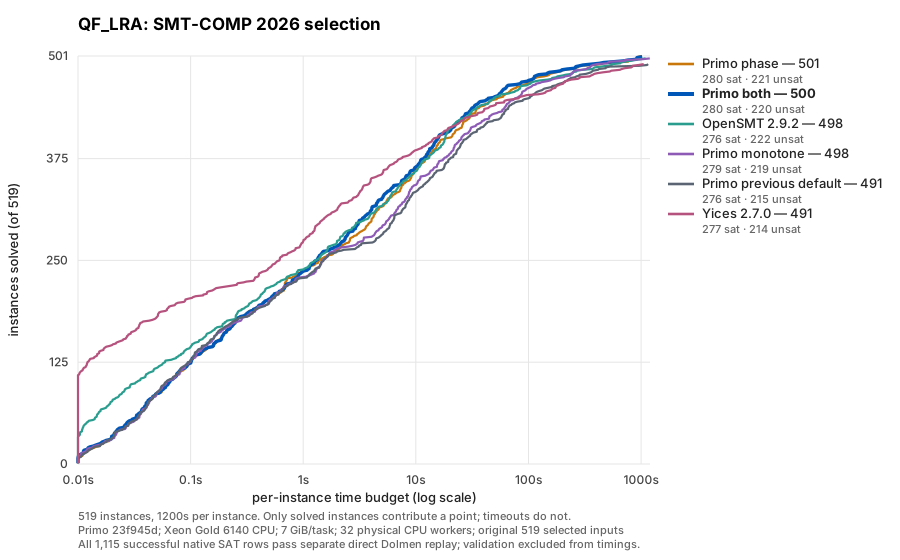
Fig. 4 Qualified selected-corpus comparison, source 23f945d. All 1,115 successful
native SAT rows pass independent direct Dolmen replay. The summary is
benchmarks/qf-lra-reverification-20261009-selection1200.json.#
The additional five-solver comparison is complete on the same 519-instance
selection with a 1,200-second limit. It contains one Primo curve using the
new automatic default, plus OpenSMT, Yices, Z3 and cvc5. All five arms use
Xeon E5-2690 v4 compute CPUs, 7 GiB per task and at most 48 physical CPU
workers. The preserved Primo source/binary is f0fbe67; current source is
unchanged. These timings form a separate comparison from the Gold results
above and the manuscript’s EPYC measurements.
Solver |
Solved / 519 |
Timeouts |
PAR2 sum (s) |
|---|---|---|---|
Primo (new default) |
499 |
20 |
63,324.003 |
OpenSMT 2.9.2 |
497 |
22 |
69,871.693 |
Yices 2.7.0 |
489 |
30 |
91,148.694 |
Z3 5.1.0 |
476 |
43 |
133,299.519 |
cvc5 1.3.4 |
471 |
48 |
168,491.139 |
All arms cover identical input content hashes, with no wrong answers, errors or disagreements among jointly decisive answers across all ten solver pairs. All 280 successful Primo SAT rows pass separate direct Dolmen 0.10 replay with unchanged parent identities and complete coverage of all 64 native shards. Replay uses 16 workers, 6 GiB per task, a 3,600-second solver timeout and a 120-second / 5 GiB Dolmen limit. Model production and validation time do not enter the original curves or PAR2.
Timing job 184352 and corrected model job 185269 use
slurm_lra_default_reference_comparison.sbatch, which interleaves solver
arms by shard and checks the explicit selection manifest, its hash/count
and CPU generation. Initial jobs 184279/184328 were cancelled after
the archived generic wrapper omitted the manifest and started on the full
corpus. Those artifacts are retained and excluded. The corrected driver
passed the exact-input five-solver canary (184343) before resubmission.
The first model job (184401) had 64 startup failures because Dolmen was
outside the batch PATH; no models were checked. The wrapper now passes
the explicit tool path, tested by direct model canary 185268 before retry.
Empty failed attempts and execution records remain available; collection
uses model-validation as an alias to model-validation-dolmen-path.
summarize_lra_reference_comparison.py audits input and solver identities,
resources, every pair of decisive answers and exact native SAT-model coverage.
A shard with no successful SAT rows needs no model CSV; missing output
for a nonempty SAT selection or a recorded artifact hash is rejected.
The committed summary, family counts, binary identities and reproduction
commands are in benchmarks/qf-lra-default-references-20261010-selection1200.json.
Raw summary artifacts are retained under
results/lra-default-references-20261010/completed-summary-artifacts.tar.gz;
full solver/model outputs remain in the recorded SLURM workspace.
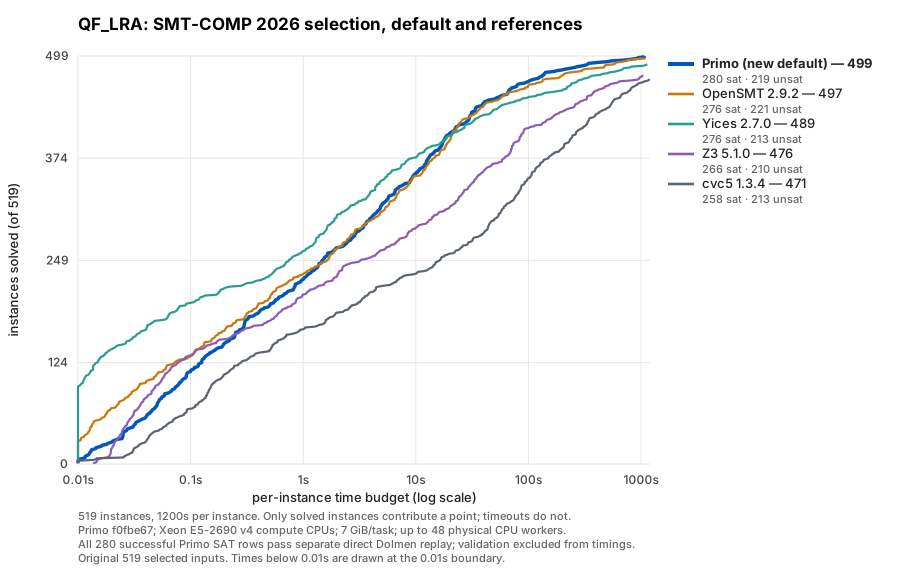
Fig. 5 Qualified new-default reference comparison. All 280 successful Primo SAT rows pass independent direct Dolmen replay. Results below 0.01 seconds are drawn at the left boundary; the initial jump counts these fast solves.#
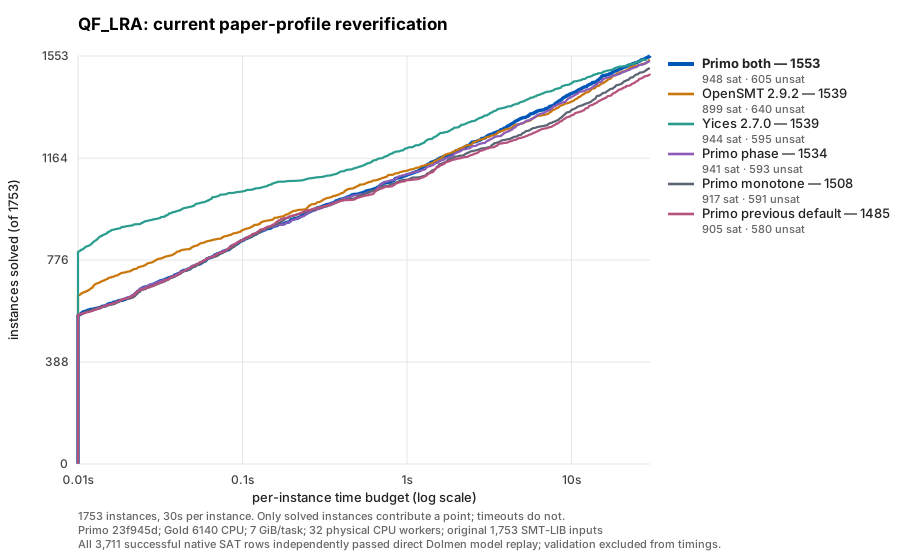
Fig. 6 Qualified 30-second comparison, source 23f945d. Model validation runs
separately and contributes no time to the curves. The committed summary is
benchmarks/qf-lra-reverification-20261009-full30.json.#
The automatic-policy candidate passed 1,000 fresh generated SAT
answer checks and 1,000 direct Dolmen checks locally before its source commit,
as well as 42 C++ tests, 188 Python tests, and all 42 sanitizer tests.
The slurm_lra_default_qualification.sbatch workflow requires another fresh
3,000-case campaign against the committed candidate, independently checks
process exit statuses, and replays only successful SAT answers. Its generated
input model stage explicitly uses Dolmen’s QF_NRA semantic superset. Another
1,000 Boolean/arithmetic cases use direct QF_LRA model checks. Real-seed
mutation uses slurm_lra_default_seed_mutation.sbatch, followed by independent
retained-input checks through slurm_lra_default_mutant_replay.sbatch.
These gates and the completed timing/model comparisons qualify the promotion
within their recorded coverage.
The committed candidate is f0fbe67: remote focused tests passed, and fresh
generated checks gave 2,976 agreements and 24 resource-only timeouts out of
3,000 inputs. All 2,563 successful SAT models passed direct Dolmen semantic
replay, and another 1,000 Boolean/arithmetic SAT models passed direct QF_LRA
checks. Real-seed mutation retained 6,785 inputs across all 17 families;
independent replay gave 6,749 agreements and 36 resource-only timeouts.
No wrong answers, crashes, parser/type errors, unsupported inputs, or reference
disagreements remained. The patched YinYang fork is clean at
04c8618a134e7a6c8b6d54fcd5ee9fd2ec64a2bb.
The retained-input qualification script requires complete shard coverage,
unchanged inputs and binary identity, all 17 families, and either an exact
successful agreement or a classified resource-only timeout. Unsupported inputs,
nonzero exits after an answer, disagreements, and raw bug artifacts block
the next timing run.
slurm_lra_default_compute_comparison.sbatch refuses other CPU generations
and records host, CPU affinity and job identity for each new timing shard.
It compares the candidate’s automatic default with explicit opt-outs over the
full 1,753-input corpus, followed by separate SAT replay for both arms. The
longer paper-profile comparison measures explicit flags in source 23f945d;
the candidate changes only automatic option selection, not the underlying
algorithms. Results from these two CPU generations remain separate.
The paired candidate run on Xeon E5-2690 v4 compute nodes has completed its timing stage: 1,525 solves for the automatic default versus 1,461 with both opt-outs; PAR2 sums are 17,495.135 and 21,513.642 seconds, respectively. The 64 net gains comprise 89 wins and 25 losses, with 18.68% lower PAR2. All 1,826 successful SAT rows passed separate direct Dolmen replay: 891 for the former default and 935 for the automatic policy, with complete coverage of all 64 replay shards and unchanged parent data/binary identities. This is an independent compatibility measurement of the automatic policy; its timings are not pooled with the Gold-node data.
The gains survive in the current implementation: the manuscript reported
22.84% lower PAR2 on the full corpus and 27.60% on the selected corpus;
the new Gold comparison gives 20.81% and 28.75%, and the separate compute
comparison gives 18.68%. The combined profile is selected for its larger
full-corpus gain; model phase alone remains a useful long-cutoff alternative,
available through --no-monotone-elimination. All 6,652 successful native
SAT runs across the three comparisons are independently validated. This
confirms current relative gains, without attributing absolute timing changes
to implementation fixes or claiming a reproduced held-out split.
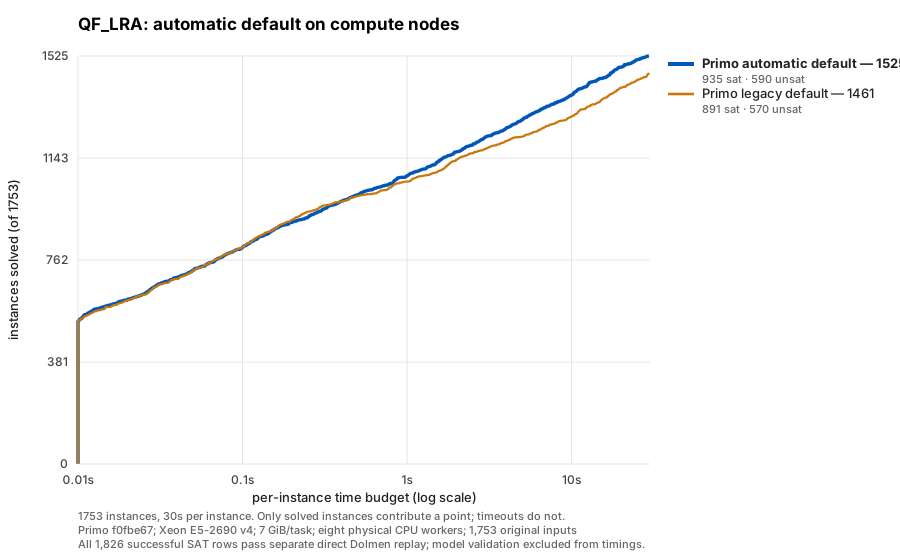
Fig. 7 Qualified automatic-policy comparison, source f0fbe67, Xeon E5-2690 v4.
The committed summary is benchmarks/qf-lra-default-policy-20261009-full30.json.
The longer Gold-node reference comparison remains a separate population.#
Written 2026-07-27 as a design note and extended through 2026-07-31. It picks
up where the competitiveness roadmap’s items 0-8 (see Arithmetic‘s
Milestone roadmap) left off, and is grounded in a fresh local
profiling/instrumentation pass run at commit 35878c4 – not in the older
3-file evidence items 0-6 were designed against.
Items at a glance#
Every item, its status, and where it is defined. Items are numbered in the order they were proposed, not the order they were implemented.
item |
what |
status |
|---|---|---|
Direct bounds for single-variable atoms; scale-canonical polynomial keys |
implemented, default |
|
Small-rational fast path in |
implemented, default |
|
Fill-in-aware (Markowitz-style) entering-variable selection |
implemented, default |
|
Batched bound assertion (deferred |
design only |
|
Model-based phase selection |
implemented, opt-in – needs measurement |
|
A difference-logic fast path |
design only |
|
Fixed-variable elimination (equality slacks) |
implemented, opt-in – did not clear its bar |
|
Merge instead of sort in |
implemented, default; zero regressions |
|
Bounds-only backtracking (the paper’s own scheme) |
implemented, default except SOI; largest single gain |
|
Delta-maintained |
implemented, default; +41/-0, took Primo past z3 (Yices and OpenSMT, both added 2026-08-03, are ahead of both) |
|
Fill-in-aware pivoting in preprocessing Gaussian elimination |
proposed, opt-in when built |
|
Guarded Real equality distribution for tropical cost definitions |
implemented, opt-in; local tropical evidence is mixed |
Where the remaining gap is, and what has been ruled out, is 6. Where the gap is after H7 (2026-07-30). Its ranked list of open directions is 6.5 Candidate directions – ranked, with status: D2 and D4 remain open, D1 and D3 were measured and rejected. The largest known engineering item is in 6.2c Where the time goes now (callgrind, 2026-07-31).
Where things stand on the 237-file promotion bar (10s timeout, z3 167 and cvc5 150 unchanged throughout):
solved / 237 |
PAR2 |
gap to z3 |
|
|---|---|---|---|
before this note (job 114200) |
108 (45.6%) |
2675.6s |
59 files |
+ H2 (job 114900) |
124 (52.3%) |
2380.9s |
43 files |
+ H1a (job 115172) |
136 (57.4%) |
2149.8s |
31 files |
+ H1b (job 117222, |
144 (60.8%) |
1962.4s |
23 files |
+ H3 (job 117222, new default) |
168 (70.9%) |
1538.9s |
z3 is 167 |
Zero wrong answers throughout, and zero regressed files at every step. Primo now solves one file more than z3 (168 vs 167) with PAR2 essentially tied (1538.9s vs 1531.6s), and the two are complementary rather than one dominating: 6 files z3 solves and Primo does not, 7 the other way round. cvc5 is at 150.
Sections 1.1 and 1.2 below describe the state before any of this; Section 2’s per-item status blocks describe what changed.
The roadmap’s own closing lesson is taken as binding here: the 9-file
“dramatic-gap” sample is for finding techniques, the 237-file stratified
sample (benchmarks/qf-lra-stratified-sample.txt) is the promotion bar.
Every item below therefore states which families it targets, why, and what
would falsify it.
Terminology and sources#
Defined once here so the rest of the note can use them freely; the sources are in LRA Related Work.
term |
meaning |
source |
|---|---|---|
General Form |
|
Dutertre & de Moura, “A Fast Linear-Arithmetic Solver for DPLL(T)”, CAV 2006, and their CAV 2006 slides |
Assert-Bound / Check / Pivot |
the three operations of the General Form Simplex this solver implements. The authors describe the algorithm as “based on the Dual Simplex” |
same, Section 3 |
basic / non-basic variable |
a variable that does or does not have a row defining it. The authors’ slides say dependent / non-dependent for the same distinction |
same |
Farkas certificate |
the conflict explanation: a subset of asserted bounds whose non-negative combination is contradictory, returned as a clause |
same, Section 3 |
|
a value |
same, Section 3.1 |
Bland’s rule |
pick the smallest-index eligible leaving and entering variable; the only selection rule with a direct termination proof, and the fallback all others revert to past a per-call pivot cap |
same |
Dantzig’s rule |
pick the largest violation and largest-magnitude coefficient – prices progress |
standard LP; in SMT, Griggio’s most-violated rule (CVC4, MathSAT5) per King’s thesis Section 2.2.12 |
SOI (Sum of Infeasibilities) |
replaces the single-row objective with a global one – minimise the summed bound violation across every out-of-bound basic variable at once, giving pivot selection a progress criterion Bland and Dantzig both lack |
King, Barrett & Dutertre, “Simplex with Sum of Infeasibilities for SMT”, FMCAD 2013. Implemented as |
Markowitz product |
|
standard sparse-LU practice; the sparsity criterion is Monniaux, CAV 2009, p.8 |
fill-in |
the growth in nonzeros per row as pivoting proceeds. Rows here start at 4-6 nonzeros and reach 22-91 during search, and each pivot makes the next more expensive |
section 6.2 measures it |
PAR2 |
the competition scoring convention: solve time for a solved instance, twice the timeout for an unsolved one. Lower is better; it rewards both solving more and solving faster |
SAT/SMT competition standard |
FTRAN / BTRAN |
in revised simplex, solving |
standard LP; relevant only to direction D4 |
Forrest-Tomlin / Bartels-Golub |
the two standard schemes for updating an LU factorization after a pivot rather than refactorizing |
standard LP; relevant only to D4 |
Two naming notes worth stating once. “Sparse” here is Primo’s own name
for the PivotingRule that prices by the Markowitz product; the field calls
the entering half minimum-column-length selection, and King’s thesis records
it as what MathSAT, OpenSMT, Yices, Yices 2, z3 and CVC4 all do – so H3 is
standard practice, not a novelty. And delta is symbolic, never a chosen
small number; that is the point of the representation.
1. Where the remaining gap actually is#
From the last full 237-file comparison (Slurm job 114200, 10s timeout; primo 108, z3 167, cvc5 150; zero wrong answers), 61 files are solved by z3 or cvc5 but not by Primo. Grouped by family, with the fastest reference time:
family |
gap files |
fastest ref |
note |
|---|---|---|---|
TM |
9 |
0.18s |
Boolean-guarded arithmetic chains |
uart |
9 |
0.19s |
ditto |
sc |
8 |
0.19s |
min/max comparator chains |
2019-ezsmt |
7 |
0.33s |
LP/blending + labyrinth |
latendresse |
6 |
0.54s |
pure conjunctive LP (flux balance) |
miplib |
5 |
0.57s |
LP relaxations |
tta_startup |
5 |
0.13s |
near-difference constraints |
DTP-Scheduling |
4 |
0.46s |
pure difference constraints |
clock_synchro |
4 |
0.49s |
near-difference constraints |
Heizmann / LassoRanker |
3 |
2.17s |
hard for everyone |
Families where Primo already matches both references (keymaera, meti-tarski, sal, spider_benchmarks, check) and families where all three solvers fail (tropical-matrix) are excluded from the design targets below.
1.1 Three distinct bottleneck classes, not one#
Fresh --stats runs (local, Release build/primo, commit 35878c4)
separate the gap files into three classes with different dominant costs:
instance |
answer |
time |
decisions |
conflicts |
pivots |
check calls |
|---|---|---|---|---|---|---|
|
(timeout) |
>30s |
0 |
0 |
<2000 |
1 |
|
sat |
19.5s |
60,750 |
0 |
7,182 |
63,021 |
|
unsat |
13.9s |
1,515 |
116 |
8,997 |
1,072 |
|
sat |
13.9s |
4,564 |
70 |
8,314 |
910 |
|
sat |
7.1s |
35,878 |
2,893 |
46,490 |
19,287 |
Class A – pure LP, one
check()call.latendressehas zero decisions: the formula is one big conjunction, so the entire runtime is a single Simplex solve that never finishes. Nothing about SAT integration, propagation, or decision heuristics can matter here. (Note the irony: these are the very flux-balance benchmarks the SOI paper was written for, and--lra-pivoting-rule soitimes out on them too.)Class B – pivot-cost dominated.
clock_synchroandmiplibneed only 1.5k-4.5k decisions but spend ~1.5 ms per pivot.Class C – assignment-volume dominated.
DTP-Schedulingmakes 60,750 decisions and zero conflicts – the SAT solver never learns anything, it just walks to a model – yet takes 19.5s, i.e. ~320 µs per decision.
1.2 Profile: the cost is allocation, not arithmetic#
perf record -g on constraints-tempo-width-30 (Class C, the least
pivot-heavy of the three classes), flat self-time:
31.4%  LraTableau::pivot
42.0%  allocator  (_int_malloc 10.5, _int_free 7.9, malloc 5.8, cfree 5.2,
                   malloc_consolidate 5.2, unlink_chunk 4.3, gmp_default_allocate 1.5, ...)
12.0%  GMP copy/init (__gmpn_copyi 5.6, __gmpz_init_set 3.4, __gmpq_clear 1.6, ...)
 5.0%  GMP arithmetic (__gmpz_mul 1.4, __gmpq_mul 1.0, __gmpz_gcd 0.8,
                       __gmpn_gcd_1 0.7, __gmpz_divexact_gcd 0.5, __gmpq_aors 0.5)
 1.3%  LraTableau::rebuild_occurs_in_index
This corrects a conclusion recorded during roadmap item 0’s follow-up,
which stated that what remained after the container fixes was “GMP’s own –
mpq_class’s arithmetic operators canonicalize (GCD-reduce) on every
add/multiply by design, an inherent cost of exact rational arithmetic no
container-level fix can remove.” Measured: canonicalization/GCD is under
2%, and all real bignum arithmetic is ~5%. Roughly 54% of runtime is
malloc/free and copying of tiny numbers. The values are small; the
representation is expensive.
1.3 Instrumentation: tableau shape and fill-in#
Temporary instrumentation (added, measured, reverted – not committed) reported the prepared tableau’s shape and how row density evolves during search.
Prepared tableau shape (one row per distinct polynomial, as built by
PreparedLraTheory):
instance |
rows |
rows that are a single variable |
share |
avg row |
max row |
|---|---|---|---|---|---|
|
4,555 |
3,161 |
69% |
3.39 |
691 |
|
1,378 |
1,311 |
95% |
1.97 |
50 |
|
400 |
262 |
66% |
2.52 |
123 |
|
1,185 |
462 |
39% |
1.82 |
8 |
|
1,446 |
526 |
36% |
1.75 |
3 |
|
584 |
84 |
14% |
2.01 |
4 |
|
264 |
5 |
2% |
2.75 |
7 |
|
3,932 |
0 |
0% |
2.00 |
2 |
|
9,469 |
653 |
7% |
5.50 |
15 |
Fill-in during search (sampled every N pivots):
instance |
initial avg row |
avg row during search |
max row |
max |
|---|---|---|---|---|
|
2.00 |
3.7 - 8.9 |
33 |
2,127 |
|
2.75 |
8.1 - 14.3 |
34 |
174 |
|
3.39 |
7.9 - 23.9 |
961 |
183 |
Two facts follow directly, and they drive most of this note:
A third to 95% of all tableau rows are trivial rows of the form
s = c·x– one slack variable and one row allocated per bare single-variable atom. They are pure overhead: rows to pivot on, entries inoccurs_in_, candidates in the violated-variable scan, and targets for fill-in.Rows densify 3-5x during search, and a single variable can occur in over 2,000 rows. Since
pivot()’s cost is|occurs_in(entering)| × |row(leaving)|row-combinations of GMP rationals, this is exactly the 31%-self-time hot spot – and no rule currently implemented (Bland, Dantzig, SOI) prices a pivot by its cost. All three price only for progress.
2. Proposed heuristics, in priority order#
Priority = (measured share of the bottleneck) × (breadth of families hit) ÷ (implementation and correctness risk).
H1 – Direct bounds for single-variable atoms (+ scale-canonical polynomials)#
Status: both halves implemented, unconditional and promoted. H1a: 124 ->
136 solved on the 237-file bar, PAR2 -9.7%, zero regressions. H1b: 136 -> 144,
PAR2 -8.7% (+10 solved, -2 regressed), measured as the bland column of item
H3’s four-way run rather than a run of its own. H1b’s local evidence had been
genuinely mixed – clock_synchro 3.1x faster and uart-18 1.5x, but
DTP-Scheduling 0.74x slower despite 8.6x fewer decisions – and that
regression did not generalize: on the broad sample DTP-Scheduling went 11 ->
12. A reminder of why the broad sample is the bar and a single instance is
not.** See Arithmetic‘s
“Direct bounds for single-variable atoms”. The predicted row reductions were
confirmed exactly, family by family, via a new :lra.rows statistic –
ecoliFBA -69%, TM/p6 -95%, pp08a -66%, sc-17 -39%, uart-17 -36%, tta_startup
-14%, clock_synchro -2%, DTP-Scheduling unchanged – each matching Section
1.3’s measured single-variable share for that instance. Paired local A/B on
top of H2: TM/p5 5.3x, sc-21 3.2x, uart-18 1.3x, miplib/pp08a 1.2x,
clock_synchro and DTP flat (as their row counts predict).
Prior art: Monniaux (CAV 2009) Section 2.1 states this as ordinary practice – see LRA Related Work.
Targets: latendresse, TM, miplib, sc, uart (36-95% of rows removed); neutral elsewhere. Class A and B, plus the whole TM/sc/uart cluster.
Problem. PreparedLraTheory allocates a slack variable and a tableau
row for every distinct polynomial, including a bare x. So (<= x 2)
becomes s = x; s ≤ 2 instead of just x ≤ 2. Worse, polynomial keys are
exact-content matches, so (<= 0 r1) (normalizing to -r1 ≤ 0) and
(<= r1 1000) produce two different slacks for the same variable –
the tableau cannot even see that r1 has both a lower and an upper bound
without pivoting. In ecoliFBAyicesTest-500 that is 3,161 of 4,555 rows.
This is also a deviation from the source algorithm: Dutertre & de Moura’s Section 2 introduces slack variables only for compound polynomials; atoms over a single variable are asserted directly as bounds on it.
Design.
Build the sharing map once in
PreparedLraTheory, while walking the complete theory-atom list. Normalize each atom to \(p\mathrel{\sim}c\) with no constant in \(p\), sort \(p\)’s terms byTermId, and divide every coefficient and \(c\) by the coefficient of the first term. A negative divisor reverses the bound orientation. The resulting exact sorted coefficient vector is thePolynomialKey; relation, strictness and scaled right-hand side are not in the key because they are bounds on the shared polynomial value.When enabled, the default-off early atom pass performs the primitive-integer GCD rewrite on the core predicate, so
2x+3y<=5and4x+6y<=10hash-cons to the same SAT atom.PreparedLraTheorystill applies leading-coefficient division as a defensive boundary, representing that direction internally asx+3/2y<=5/2. Both forms identify the same rational scale class.The original H1b comparisons evaluated sharing proportional polynomials, not leading-coefficient-one versus coprime-integer tableau rows. The former gives a simple uniform scaling operation but can introduce fractions; there is no isolated performance result here establishing it as the better coefficient representation. The later early-atom-pass experiments retain the same tableau normalization and do not settle that question either.
Look up each compound key in
slack_by_polynomial. The first occurrence allocates a slack and defining row; every later proportional atom reuses that slack as itsPreparedAtom::bound_var. This lookup, rather than a comparison during an individual theory call, is what identifies the opportunity to share.If the canonical polynomial has exactly one term, it is now exactly
x: do not allocate a slack or a row. StorePreparedAtom{var = x, relation, rhs}and assert the bound directly on the structural variable.Rename/generalize
atoms_by_slackto an index from “tableau variable a bound was just asserted on” to “atoms that could now be entailed”. The existing same-slack propagation scan works unchanged over it, and now also relates atoms that previously lived on different slacks. (As built, this isPreparedLraTheory::atoms_by_bound_var; the design text above saidatoms_by_var, which never existed under that name.)Delete
single_variable_slack/variable_for_single_slackentirely. Row-based propagation (compute_implied_bound) can then read a row term’s bound directly fromLraTableau::upper_bound/lower_boundwith no indirection, which both simplifies it and strictly increases its reach – including for terms that today have no single-variable wrapper atom at all.
Bonus: the canonicalization step is exactly the not-yet-scheduled
roadmap item 3 (scale-invariant polynomial matching). x <= 5 and
2x <= 10 normalize to the same direct bound and need no slack. Compound
atoms are prepared globally: PreparedLraTheory allocates one stable
s = x + y row for the complete scale-equivalence class, before any theory
call. Thus x + y <= 5 and 2x + 2y <= 10 both become s <= 5, while
2x + 2y <= 12 becomes the distinct bound s <= 6 and
-x - y <= -5 becomes s >= 5. Every one of those SAT atoms points to the
same bound_var across all theory calls and backtracking states. A currently
weaker asserted upper bound is ignored by the tableau, but cannot be removed
from the whole formula because another Boolean assignment may assert it alone
or negate it. With the default-off --arithmetic-atom-canonicalization, exact
equivalent source atoms are interned by the primitive-integer pass before
clausification; distinct right-hand sides remain distinct SAT atoms. See
Early LRA atom canonicalization.
Also fixes, without extra work, the quirk item 7 documented and worked
around: “single_variable_slack only registers a bare variable’s
positive-coefficient normalized form, so >= atoms never get an entry”.
Risk: low-to-moderate. Bounds now land on structural variables, which
can become basic through pivoting – but assert_upper/assert_lower
already handle a basic target (update_violation_status + SOI direction
branch), and Farkas conflict generation already reads each variable’s own
bound reason regardless of whether it is a slack. LraTableau itself needs
no change at all; this is entirely a check_sat.cpp
PreparedLraTheory/OnlineLraPropagator change. The correctness-sensitive
part is the rhs rescaling and relation flip (c·x ≤ k is x ≤ k/c for
c > 0 and x ≥ k/c for c < 0), plus the strict/non-strict handling in
DeltaRational – all directly unit-testable.
Falsifier: if row counts drop as predicted but wall time does not improve on latendresse/TM/miplib, then row count was never the cost and H3/H2 are the whole story.
Falsifier outcome: partially triggered, and informative. Row counts fell exactly as predicted everywhere. Wall time followed on TM (5.3x), sc (3.2x), uart and miplib – but not on latendresse, which lost 69% of its rows and did not move at all. So for the Class A pure-LP instance the falsifier fired: row count was never its cost. What remains there is a 1,394-row LP with a 691-term dense row and no Boolean structure whatsoever, which is precisely H3’s fill-in problem. That sharpens H3 from “helps Class B” to “is the only remaining lever for Class A”, and it is the concrete reason to do H3 next.
H2 – Small-rational fast path in util::Rational#
Status: implemented, unconditional, 2026-07-28. See
Arithmetic‘s “Two-tier rational representation” for the shipped design
and docs/run-log.json for the verification trail. Paired local A/B on the
profiled instances: 2.1x-5.2x faster (best-of-3), with every search counter
bit-identical (a pure representation change). On the 237-file promotion bar:
solved 108 -> 124, PAR2 -11%, 16 newly solved, zero regressions, zero wrong
answers (Slurm job 114900) – it clears the bar that item 8 failed. Clean at
merge-gate and campaign-gate fuzz tiers on both pivoting paths. Two design
points below were
revised during implementation and are corrected in place: the small form is
64-bit rather than 32-bit (an ablation, not a settled question), and demotion
is required, not forbidden – see the canonical-form paragraph.
Prior art: this is Monniaux’s own implementation choice (CAV 2009, Section 4), found only after the profiling above independently reached the same diagnosis – see LRA Related Work.
An alternative that was never evaluated: GMP cannot provide a small form
itself (its struct is pointer-based and its layout is frozen ABI), but other
libraries can and do – FLINT’s fmpq is this exact scheme. So the real choice
was “keep GMP and add a fast path” against “adopt a library that already has
one”, and only the first was considered. Tracked as D5, where it is
deliberately ranked as not a priority: H2 already took the win that was on the
table, and the reason to revisit would be shedding the canonical-form
invariant rather than chasing speed.
Targets: everything. The single largest measured lever (54%).
Problem. util::Rational wraps mpq_class; every value is two
heap-allocated GMP integers, and DeltaRational holds two of them. Section
1.2 measures ~42% allocator + ~12% GMP copy/init against ~5% actual
arithmetic.
Design. Tagged small/big representation behind the existing (already fully encapsulating) public API:
Fast path:
std::int64_t num, denwithden > 0andgcd(num,den) = 1, stored inline. Knuth’s two-gcd addition and cross-reduced multiplication (TAOCP Vol. 2, Sec. 4.5.1) in__int128; binary GCD on machine words. As shipped, no overflow checks on the intermediates are needed at all: canonical operands bound every product by2^126and every sum by2^127, so only the reduced result needs a range test.Slow path: promote to a heap
mpq_classwhen the reduced result doesn’t fit – and demote again as soon as a result does fit. The original version of this note had that backwards (“stay promoted – demotion is a correctness footgun”); it is the opposite. Demotion is what makes the representation a function of the value, which is precisely whatRationalHashneeds: without it the same number could be stored two ways and hash two ways, andPolynomialKeyhash-consing would silently stop matching. Implemented as a canonical-form invariant (big form iff the value does not fit small) established at exactly two private factories and asserted by a debug/ASAN-onlycheck_invariant().sign(),is_zero(), comparison, and negation are branch-light and allocation-free on the fast path. With the invariant in place,RationalHashcan hash the small pair directly andoperator==can reject a form mismatch outright.No call-site changes:
mpq_classalready appears only insiderational.hpp/.cpp, exactly as that file’s own comment intends.Width: 64-bit rather than Monniaux’s 32-bit, behind the single
kSmallMaxknob so the two can be compared empirically. Ablation run 2026-07-28 – 64-bit kept. On instances whose coefficients never leave 32 bits the two widths are within noise, or 32-bit is up to ~13% faster (__int128operations are multi-instruction); on the one instance that does overflow, 64-bit is 2.2x faster because it cuts big-form operations 12-fold. A few percent on the common case for a factor of two on the hard one. The ablation also turned up a real latent bug – see Arithmetic.
Risk: moderate, concentrated and testable. It is the numeric core, so a
bug is a wrong answer rather than a slowdown. Mitigation as planned:
randomized differential unit tests against mpq_class for + - * /, all
comparisons, sign, is_zero, to_string, and parse, with adversarial
magnitudes straddling the overflow boundary; ASAN/UBSan suite; and the full
campaign-tier fuzz gate on both pivoting paths (unconditional core code, so a
campaign-gate change by the standing precedent).
This paid off during implementation: the ASAN run caught a real disagreement
between from_mpq’s “fits small” test (mpz_fits_slong_p, which admits
INT64_MIN) and the small form’s own range (which excludes INT64_MIN so
negation can never overflow) – the two differed by exactly that one value.
Fixed by giving both a single shared predicate. A separate deliberate-mutation
check (dropping demotion) confirmed the unit tests fail loudly when the
invariant is broken, which matters because that particular bug is otherwise
silent.
Expected: removal of most of the ~54%; realistically 1.5-2x solver-wide on QF_LRA, and it compounds with every other item here since they all reduce counts of the same operations.
Measured: 2.1x-5.2x on the profiled instances – better than expected,
because the allocator cost was compounding across DeltaRational (two
Rationals per bound and per assignment) rather than being paid once. The
weakest case (clocksynchro_2clocks, 2.1x) is the one instance whose
coefficients genuinely outgrow 64 bits: 1.22M promotions, so it keeps paying
GMP’s cost. That is also the first hard evidence for which instances the
width ablation could still move.
H3 – Fill-in-aware (Markowitz-style) entering-variable selection#
Prior art, checked 2026-07-30 (after implementation). This rule is the field’s standard rather than a technique transferred from one paper. King’s thesis (NYU 2014) Section 2.2.12 records minimum-column-length entering selection with a Bland fallback past a finite cap as what MathSAT, OpenSMT, Yices, Yices 2, z3 and CVC4 all do – i.e. H3 and its anti-cycling story exactly. The Monniaux citation below remains an accurate source for the sparsity criterion, but H3 should not be read as novel. The leaving-side knob is the part with no counterpart there: King records Griggio’s most-violated rule (CVC4, MathSAT5), which is our Dantzig choice, not our shortest-row one. See LRA Related Work.
Status: implemented 2026-07-28, promoted to default 2026-07-29
(LraPivotingRule::Sparse with the leaving-side half on). On the 237-file
bar: 168/237 against the former default’s 144, PAR2 1538.9s vs 1962.4s,
+24 files with zero regressions, campaign-gated on both pivoting paths.
See Arithmetic and docs/run-log.json. See Arithmetic‘s “Fill-in-aware pivot
selection” for the shipped design. First local numbers, and one result that
was not anticipated:
instance |
bland |
dantzig |
sparse |
sparse + leaving |
|---|---|---|---|---|
|
1.56s |
3.43s |
0.72s |
– |
|
1.17s |
0.50s |
0.22s |
– |
|
7.41s |
5.96s |
1.93s |
– |
|
1.63s |
0.86s |
1.82s |
– |
|
timeout |
~19.5s |
timeout |
~0.65s |
The unanticipated result is the last row. The leaving-side policy
(repair a short row first, now default-on and ablated by
--no-lra-sparse-leaving) was planned as a
lower-priority follow-up precisely because it is not progress-neutral. It
turns out to be what cracks Class A: every latendresse file goes from
“never solved by Primo” to ~0.65s, roughly 30x faster than the only other
rule that solves them at all, with :lra.pivot-term-ops 8.7M against
Dantzig’s 130.9M. That family is 0/15 on the promotion bar today and z3 only
manages 6/15.
In hindsight it is the expected shape: a pure-LP instance is one check()
call with no Boolean structure, so “which infeasibility to repair” has no
search-trajectory consequences to get wrong – the objection that made the
knob risky simply does not apply to Class A. It is still a real risk on the
Boolean-heavy classes, which is why it remains separately ablatable and gets
its own measurement column.
Second finding, also worth keeping: Dantzig had not been run on the
237-file bar before this promotion experiment, and it solves latendresse
where Bland does not. Any sparse-vs-bland comparison that omits it would
misattribute part of the win, which is why the promotion run is four-way
(bland / dantzig / sparse / sparse+leaving).
Targets: Class B (clock_synchro, miplib) and Class A (latendresse)
directly; helps Class C too, since Section 1.2’s profile is from a Class C
file and still shows pivot() first.
Problem. pivot(leaving, entering) rewrites every row in
occurs_in_[entering], merging in the new entering row – cost
≈ |occurs_in(entering)| × |row(leaving)| rational operations. Bland picks
the smallest index entering candidate; Dantzig picks the largest
|coefficient|; SOI picks by global objective decrease. None of the three
considers what the pivot will cost or how much fill-in it creates, and
Section 1.3 measures rows densifying 3-5x with occurs_in reaching 2,127.
In floating-point LP that trade-off is dominated by numerical stability, so textbook pricing rules ignore fill-in and leave it to the LU refactorization layer. Primo has exact rationals: there is no stability constraint at all, and no refactorization layer – so the fill-in term is unopposed, and this is where Primo’s cost structure genuinely differs from the LP literature’s assumptions.
Shipped definition. The initial entering-side experiment used Dantzig’s most-violated leaving choice. The promoted profile additionally enables the shortest-row leaving choice, so describing current Sparse as merely “most-violated plus minimum column length” is stale. The authoritative formal definition, including row/column length, movement eligibility, exact lexicographic tie-breaks, bounded cyclic pricing, both leaving-policy ablations, and the Bland suffix, is in Arithmetic‘s “Fill-in-aware pivot selection” section.
In brief, the default first minimizes
(row_length, -violation, variable_id) over violated basic rows. Within the
chosen row it scores at most k eligible entering variables and minimizes
(column_length, nonunit_coefficient, variable_id). Row length is the number
of nonzero right-hand-side terms; column length is the number of current basic
rows containing that nonbasic variable. This is a sequential, partially priced
cost heuristic, not a global minimization over every feasible pivot pair.
Risk: low. Purely a selection change inside check(); no new state, no
trail interaction, no explanation change. The real risk is empirical:
cheaper pivots but more of them. That is why :lra.pivots must be reported
alongside wall time in the evaluation, and why it lands opt-in.
Falsifier: if pivot counts rise more than per-pivot cost falls on clock_synchro/miplib, the rule is net-negative and should be rejected outright rather than tuned – item 8’s cost-ranking episode is the cautionary precedent for tuning a heuristic that was steering search wrong.
Falsifier outcome: fired on miplib/pp08a for the entering-side rule
alone (pivots +43%, term-ops +19%, 1.63s -> 1.82s) – and that was the
right signal to keep measuring rather than to tune. Adding the leaving-side
half turned the same instance into 1.36s, better than Bland, and the broad
sample settled the question decisively at +24 files with no regressions.
The lesson is the one item 8 taught, applied correctly: take the broad
sample’s verdict, and neither tune a losing heuristic nor discard one on a
single instance.
H7 – Fixed-variable elimination (equality slacks)#
Status: designed 2026-07-29, implemented 2026-07-30, and NOT promoted –
it ships opt-in behind --lra-fixed-elimination (eed259c .. ebd2533).
It did not clear the 595-file scrambled bar, and its row-freezing half was
deleted outright. See the falsifier outcome at the end of this item; that is
the part worth reading. This is also the first item in this note whose
evidence comes from a set Primo was never tuned against.
Where it comes from (figures as of 2026-07-29, when H7 was designed – H8 and H9 have since taken this to 399; see Arithmetic for the current standing). On the 595-file scrambled QF_LRA competition set at a 60s timeout, Primo solved 373 against z3’s 429 and cvc5’s 351 – ahead of cvc5, behind z3, with zero cross-solver disagreements. The whole deficit sits in one size band:
file size |
n |
primo |
z3 |
cvc5 |
|---|---|---|---|---|
0-50 KB |
182 |
180 |
181 |
181 |
50-500 KB |
191 |
142 |
134 |
122 |
500 KB - 5 MB |
173 |
43 |
100 |
43 |
> 5 MB |
49 |
8 |
14 |
5 |
Primo leads both references below 500 KB and collapses above it, landing on exactly cvc5’s number in the 500 KB-5 MB band while z3 more than doubles them.
It is not a preprocessing size problem. That was the first hypothesis and
it is wrong: on four profiled gap instances Primo’s prepared tableau matches
z3’s reported dimensions within ~5% every time (9,315x11,633 against z3’s
9,000x11,330; 8,960x10,479 against 8,892x10,415; and so on). Primo also already
folds the scrambler’s (* 1.0 t) / (+ t 0.0) obfuscation – checked
directly, term size and solve-eqs counts are identical with and without it.
Both solvers build the same problem.
The difference is what happens to equalities. These instances are dominated
by them – 8,226 to 40,820 lowered Real equalities per file, against 4,822 to
24,976 tableau rows, so most rows exist because of an equality. Primo lowers
t1 = t2 to t1 <= t2 and t2 <= t1; since item H1b those two normalize onto
one shared slack, which then receives an upper and a lower bound at the same
value. That slack is fixed, and Primo does nothing with the fact – it stays
a live, pivotable row for the rest of the search.
z3 does something with it, and reports how much: :arith-fixed-eqs 168-52,364
and :arith-offset-eqs 855-68,937 per instance. Its search then barely runs –
on scrambled126657 it needs 9 decisions and 4 conflicts where Primo makes
141,124 decisions and 321M pivot term-operations. Profiling Primo there puts
86% of runtime in LraTableau::pivot, averaging 431 rows rewritten per pivot.
Prior art, and the setting difference that explains the result. Removing fixed variables is standard LP presolve, and the canonical reference is Andersen & Andersen, “Presolving in linear programming”, Mathematical Programming 71 (1995), 221-245 (https://link.springer.com/article/10.1007/BF01586000; see LRA Related Work). H7 is not that technique transferred intact, and the difference is exactly where the result comes from: presolve removes fixed variables once, before solving, from a problem whose bounds are all known, so the removal is paid for once and never undone. In DPLL(T) a variable becomes fixed during search, when two bounds asserted at some decision level happen to coincide, and every elimination must be trailed and restored on backtracking. The paper offers no guidance on that regime, and it is the most likely reason H7’s per-instance wins do not survive aggregation – see the falsifier outcome below. (Paper cited for provenance, not read in full; no result from it is claimed here.)
Design, as implemented (commit eed259c). The mechanism turned out to be
much smaller than the design sketch above suggested, because of one property
the tableau already had: can_enter() already rejects a fixed variable.
With lower == upper == assignment, every branch of its assignment < upper /
assignment > lower test is false. A fixed non-basic variable is therefore
already completely inert – it is never selected to enter, so its column never
moves. Only fixed basic variables churn, and the fix is to stop them being
basic.
So assert_upper/assert_lower now do exactly this when they make a basic
variable’s bounds coincide:
Pivot it out, choosing an entering variable from its row, then
update()it to its fixed value – which is mandatory anyway, since non-basic variables must always sit within their bounds, and is precisely what makes it inert. No substitution pass and no constant column are needed: the new basic variable’s dependence on the now-inert fixed variable is the constant term.Prefer an entering candidate with no bounds, then the Markowitz occurrence count, then a
+/-1coefficient – and never one that is itself already fixed, which the other criteria actively steer into (a fixed slack tends to occur in few rows and to carry a unit coefficient). An unbounded basic variable’s row can never be violated, so it never demands another repair pivot.
A third step – freezing the resulting row out of the working set entirely when its variable was provably unconstrainable – was implemented, measured, and removed. What it cost, and why it went, is below.
Offset equalities (x - y = c) remain a follow-on, matching z3’s
arith-offset-eqs: merge the two columns rather than carrying both. Better
attempted only once fixed-variable elimination is measured, since the two
overlap.
Risk, and where it actually lives. The elimination pivot is a pure change
of representation – the same thing check() does on every repair – so it
cannot produce a wrong answer. build_conflict needs no change either: it
takes each row term’s bound reason, so a fixed variable appearing in a row
contributes the asserting literal of the equality that fixed it, which is
exactly the right Farkas antecedent.
Freezing was different, and that asymmetry is the whole reason the two halves
were built with separate switches. Its soundness reduced to a single
condition: only freeze a row whose basic variable has no bounds and can
never acquire any. “Unbounded right now” was not sufficient. A frozen row is
deliberately dropped out of the machinery that maintains it, so its own
assignment stops tracking its terms and its terms are no longer kept
non-basic; a bound asserted against it later would be tested against a stale
value. Only the caller knows which variables can ever be bounded – it owns
the atom-to-tableau-variable map – so LraTableau::mark_boundable() made it
say so, and an assert against a frozen row threw rather than answering from a
stale assignment.
None of that machinery survives (ebd2533), so the retained mechanism has
no wrong-answer mode at all: a pivot is what check() already does on every
repair. The guard is recorded here because its mutation check is the evidence
that removing it was the right call rather than a lucky one – it was
genuinely load-bearing, so keeping the feature would have meant keeping the
risk:
Dropping it entirely (freeze any row): caught by its dedicated unit test, and it makes an existing end-to-end test return the wrong verdict (
gaussian_elimination_can_be_disabledgoes from sat to not-sat). So the condition is genuinely load-bearing for soundness, not just for tidiness.Dropping only the
mark_boundablehalf, keeping “unbounded right now” – the plausible-looking weaker guard: caught by the unit test, and on real benchmarks the throw fired immediately (variable 1133 onscrambled335326, 1584 onlatendresse/ecoliFBAyicesTest-500). That is the case that would otherwise have been a silent stale-value read.
Falsifier. If eliminating fixed variables does not reduce
:lra.pivot-row-updates proportionally to the share of rows eliminated, then
the fill-in is not concentrated in those rows and the diagnosis above is wrong.
Falsifier outcome: the mechanism works and the item still loses. This is the interesting part of H7, and the reason it is written up at length despite not shipping on by default.
The local evidence was strong. Paired A/B on the profiled instances (workstation, 120s cap):
instance |
H7 off |
H7 on |
|
|---|---|---|---|
|
0.8s |
0.1s |
8.66M -> 0.13M |
|
51.0s |
14.9s |
195M -> 27M |
|
timeout |
timeout |
492M -> 40M in the same 120s |
|
timeout |
timeout |
238M -> 140M |
An 8x, a 3.4x, and an order of magnitude less pivot work on instances that still time out. The diagnosis was right: these tableaus really are dominated by fixed equality slacks, and eliminating them really does remove most of the pivoting.
It does not convert. On the 595-file scrambled set at 60s (job 117487, 3 Primo configurations x 20 shards, z3/cvc5 reused unchanged):
config |
solved |
PAR2 |
0-50KB |
50-500KB |
500KB-5MB |
>5MB |
|---|---|---|---|---|---|---|
H7 off |
373 |
29204 |
177 |
144 |
45 |
7 |
H7 on |
374 |
29237 |
179 |
140 |
41 |
14 |
H7 on, freezing off |
375 |
29195 |
179 |
138 |
45 |
13 |
z3 |
429 |
23138 |
178 |
136 |
101 |
14 |
+1 file on 595. PAR2 flat. The churn underneath is +19/-18 – symmetric – and over the 139 files both configurations solve in more than a second the median speedup is 0.94x, a slight net slowdown. Big wins (4.88x, 3.31x, 3.26x) are matched by big losses (0.18x, 0.19x, 0.23x). On the 237-file stratified sample the same picture: 167 -> 168, PAR2 1559 -> 1532. Zero cross-solver disagreements on either set.
There is one real signal: the >5MB band doubles, 7 -> 14 of 50, exactly matching z3’s own 14 – the band most dominated by equalities, which is where the diagnosis said the effect would be. It is paid for in the 50-500KB band (144 -> 140), and the trade nets out.
So H7 ships opt-in. No size or row-length threshold was added to keep the
5MB win while dodging the mid-range cost: that is tuning a heuristic that lost its own bar, which is exactly item 8’s mistake.
The freezing half was deleted, not left behind a flag. It is strictly negative in the table above – four files lost in the 500KB-5MB band (41 against 45) for one gained elsewhere – while carrying every bit of H7’s wrong-answer risk. 352 lines removed against 106 added.
What this said about the remaining gap at the time. The 56-file deficit
against z3 was not mostly the fixed-equality effect, even though that effect
was real and large per-instance. At the time, two candidates remained:
offset equalities (x - y = c as a column merge, z3’s other counter,
855-68,937 per instance) and the possibility that the mid-range cost here was
the elimination pivots’ own price on tableaus where fixed rows were never the
bottleneck. The offset-equality branch is now closed by the D1/D3 sweep below;
the sentence is kept as history, not as an open task.
H8 – Merge instead of sort in pivot’s affected-row loop#
Status: implemented, unconditional, promoted 2026-07-31. Unlike H1-H7 this came from a flat profile rather than a design argument, so its measurement and the profile that found it are written up in 6.2b Acting on the profile: H8, and one rejection (2026-07-31); this entry is the definition the rest of the docs refer to.
First, what “sorted” refers to. The tableau is a vector of vectors,
and the two levels are indexed by completely different things – which is the
single most confusing thing about the representation, so it is worth being
concrete. A real 8-variable tableau with three basic variables, dumped from
the actual structures:
rows_ : indexed by variable id                        <- LEVEL 1
  rows_[0..4] = (x0..x4 are not basic, slot unused)
  rows_[5] = [ {var=x0, coeff=2,  occ_slot=0}, {var=x3, coeff=-1, occ_slot=0} ]
  rows_[6] = [ {var=x3, coeff=1,  occ_slot=1}, {var=x4, coeff=7,  occ_slot=0} ]
  rows_[7] = [ {var=x0, coeff=1,  occ_slot=1}, {var=x1, coeff=1,  occ_slot=0},
               {var=x4, coeff=-3, occ_slot=1} ]
                    ^--------------- LEVEL 2 ---------------^

occurs_in_ : also indexed by variable id
  occurs_in_[0] = [ x5, x7 ]      occurs_in_[3] = [ x5, x6 ]
  occurs_in_[1] = [ x7 ]          occurs_in_[4] = [ x6, x7 ]
Level 1 – vars_, rows_, occurs_in_ – is dense, one slot per
variable, and the index is the variable: rows_[5] means “x5’s row”. No
ordering question arises here.
Level 2 – the Row inside one of those slots – is not indexed by
variable. It is a sparse list holding one entry per non-zero term, each
entry labelled with the variable it concerns:
struct RowEntry {
  LraVarId var;         // which variable this term is for
  util::Rational coeff;
  std::uint32_t occ_slot;  // this row's index inside occurs_in_[var]
};
using Row = std::vector<RowEntry>;
rows_[7][0] is therefore not “x0’s coefficient in row 7”; it is “the first
stored term of row 7”, and only reading its .var reveals it concerns x0. The
row’s length is its non-zero count (2, 2, 3 above), never the variable count.
Its occ_slot=1 says that this row’s basic variable, x7, is stored at index 1
of occurs_in_[0]: occurs_in_[0][rows_[7][0].occ_slot] == x7. The slot is a
back-index into that column list, not an index into rows_[7]; see
Tableau sparse-row and occurrence representation for the complete invariant and maintenance
rules.
Mathematically rows_[5] is the vector (2, 0, 0, -1, 0, 0, 0, 0). Dense
storage would be 8 slots indexed by variable; sparse storage is 2 entries
carrying their own labels. The numbers force the sparse form: on
constraint-199552 the tableau has 1,440 rows over ~1,900 variables holding
only 3,519 non-zeros, an average row length of 2.44
(The tropical-matrix family: what the formulas actually say). Dense rows would be ~2.7M slots for 3,519
real values, and every row operation would cost O(variables) rather than
O(non-zeros).
So “sorted” is a statement about level 2 only: within a single row, the
entries are kept in strictly ascending order of their .var field (and never
carry a zero coefficient) – x0, x1, x4 in rows_[7]. It is an ordering over
a row’s contents, which only exists because those contents are a sparse
labelled list instead of a dense index.
Sortedness is also decided per container, not globally: occurs_in_’s inner
lists have the same two-level shape but are deliberately not ordered,
since removal there is a swap-pop that destroys any order (see
Open leads register lead 3b).
What H8 is. pivot() combines each affected row with the scaled entering
row – and because both are sparse lists, combining them means pairing up the
entries that refer to the same variable, which a dense representation would
get for free from the index. It used to concatenate the two into a scratch
buffer and std::sort the result, once per affected row per pivot. But both
halves already arrive ordered by variable id, so sorting re-establishes
something that was never lost: the correct operation is a linear two-way
merge, walking both lists in step and adding coefficients where the var ids
coincide.
The change makes that ordering an explicit invariant on Row, which
add_row() establishes by sorting and pivot() preserves by splicing
basic_var into new_entering_row at its ordered position. Two smaller wins
follow: the zero check is needed only in the equal-var-id branch, and the
affected row is taken by reference and moved into the trail rather than
copied twice.
Sortedness is a choice, not a necessity, and the alternative is a real design: King’s tableau (thesis §2.2.7, see Paper summaries) keeps rows as explicitly unsorted linked lists and pays for a dense O(n) scratch map per row addition instead of a merge. Both reach O(‖Ti‖ + ‖Tk‖); Primo’s version buys cache-friendly contiguous rows and pays by having to maintain the order.
Result. Scrambled competition set (595 files, 60s) 369 -> 378 solved with churn +9/-0; stratified sample 189 -> 192, +3/-0; mid-band gap 37 -> 38, +1/-0. Median paired speedup 1.16-1.23x with a tight p25-p75 (1.10-1.33), so a uniform constant factor rather than a few instances carrying an average. Zero regressions on any bar, which no other item here has managed.
Why it matters beyond its own number. The Row ordering invariant it
established is what later made bounds-only backtracking’s merge cheap, and
it is the precondition for the delta-maintained occurs_in_ that
6.2c Where the time goes now (callgrind, 2026-07-31) identifies as the largest item left.
H9 – Bounds-only backtracking#
Status: implemented, unconditional except under SOI, promoted 2026-07-31. Strictly this is not a heuristic but a return to the paper’s own design, found by re-reading the technical report line by line against the code; it is numbered here so the rest of the docs have something to point at. Full write-up in A Fast Linear-Arithmetic Solver for DPLL(T)‘s deviations section.
What it is. pop() restores bounds and nothing else. It used to restore
bounds, assignments and every pivot’s row rewrite. The paper (technical
report SRI-CSL-06-01 Section 3.2.4) trails only bounds: the assignment
satisfies Ax = 0 independently of the basis, and pop() only ever
relaxes bounds, so neither the assignment nor the basis needs restoring.
Primo’s contrary justification was circular – reverting the assignments is
what forced reverting the pivots. PivotingRule::Soi keeps the old scheme,
since its objective row is a sum over the currently-violated rows rather
than a linear combination of A.
Result. Scrambled competition set 378 -> 399 solved, PAR2 28691 -> 26661; stratified 192 -> 197. The mechanism is that not undoing pivots lets the search keep the repair work it already paid for: pivot counts fall 2.3-5.3x on the profiled instances.
It is not regression-free, unlike H8 – Merge instead of sort in pivot’s affected-row loop. Churn is +32/-11, and among the 145 commonly-solved files over a second, 62 are more than 10% slower against 64 more than 10% faster – median 1.01x, tails 0.10x to 24.9x. It nets +21 because the wins land on instances near the timeout. The variance is inherent: keeping the basis across a backtrack keeps one that suited the previous subproblem.
H10 – Delta-maintained occurs_in_#
Status: implemented, unconditional, promoted 2026-08-01. The item 6.2c Where the time goes now (callgrind, 2026-07-31) identified as the largest remaining engineering target, and the last of the three that started from a profile rather than a design.
The reasoning, which is the whole of it. occurs_in_[v] records which
basic rows mention v – a set of row identities, with no coefficient
information whatsoever. pivot()’s affected-row loop used to remove
other_basic from every term’s list up front and then re-add it for every
term of the rebuilt row. For any variable present both before and after,
that round trip removes an entry and puts back the identical entry. It is a
no-op performed 40.1 million times, scanning 37.6 billion vector elements
(see 6.2c Where the time goes now (callgrind, 2026-07-31) for the measurement).
Enumerate what a pivot actually does to one affected row, using the fact that both inputs are ordered by var id (H8’s invariant), so the merge already classifies every term into exactly one of four cases:
case |
row membership |
|
|---|---|---|
in |
stays, coefficient unchanged |
unchanged |
in both, sum non-zero |
stays, coefficient changed |
unchanged – no coefficients are recorded |
in both, sum cancels to zero |
leaves the row |
remove |
in |
newly enters the row |
add ( |
|
leaves the row |
nothing – see below |
So the only scan-bearing update left is cancellation, which is rare.
entering_var needs no per-row removal because pivot() clears
occurs_in_[entering_var] wholesale when it becomes basic – it is basic
afterwards and so belongs to no row’s term list at all.
Result on the bars (jobs 118218/118219, base 4f9b741 verified by
content as well as banner): scrambled competition set 398 -> 439 solved,
PAR2 26723 -> 22207; stratified sample 197 -> 202. Churn +41/-0 and
+5/-0 – zero regressions on either, and only 2 of the 173
commonly-solved files over a second are more than 10% slower. Median paired
speedup 1.51x (p25 1.15, p75 2.26, max 8.0x).
439 against z3’s 429 on the same 595 files, from 56 behind on 2026-07-29. Absolute counts drift a few files between jobs – this run’s own baseline solved 398 where H9’s recorded 399 – so the within-job +41/-0 is the trustworthy figure and the z3 comparison is “ahead, by roughly ten”.
Local measurement. Paired interleaved A/B, two reps each, answers identical:
scrambled228965 4.85x/4.50x, scrambled259571 2.85x/3.00x,
scrambled365036 2.23x/2.35x, scrambled339450 1.15x/1.22x. gprof on
scrambled228965 shows pivot’s self time falling 10.04s -> 1.26s at
an identical 3,460 calls – 90.7% of the profile down to 49.6% – and what
remains is arithmetic (Rational::operator* 6.7%, update 4.3%,
operator< 3.9%) rather than bookkeeping.
Correctness. The risk here is not a crash but a silently wrong index:
update() would skip a dependent row, or sparse pricing misjudge a column,
and the answer would be wrong much later and elsewhere.
occurs_in_index_matches_full_rebuild() compares the maintained index
against a rebuild, and two tests call it after every pivot across all four
pivoting rules plus a dedicated cancellation case. Those tests were written
before the working implementation and caught the first attempt (below).
A note on the first attempt, since the docs briefly recorded the wrong
diagnosis. It was reverted on 2026-07-31 after producing duplicate
occurs_in_ entries, and the failure was written up as an unlocated defect
“surviving a cancellation-adjacent path”. The real cause was duller: the
patch that was supposed to rewrite the cancellation branch silently did
not apply – a multi-line pattern that no longer matched after
clang-format reflowed it – so that branch kept the old round-trip
behaviour, adding entries the new code no longer removed. The algorithm was
right the first time; the edit was not. The lesson is about verifying that
an edit landed, not about the tableau.
H4 – Batched bound assertion (deferred update())#
Targets: Class C (DTP-Scheduling, tta_startup, TM/sc/uart).
Problem. Every asserted bound on a nonbasic variable immediately calls
update(), which walks occurs_in_[var] and rewrites every dependent
basic variable’s assignment – up to 2,127 rows for one variable on
constraints-tempo-width-30. CaDiCaL delivers assignments in batches
(notify_assignment(const std::vector<int>&)), and roadmap item 6 already
established that the repair (check()) can be deferred to
cb_has_external_clause. The assignment move can be deferred the same
way, and for the same verified reason.
Design. Split assert_upper/assert_lower into (a) the eager,
O(1) part – record the bound, detect a direct
lower > upper contradiction, push the trail entry – and (b) the deferred
part, the nonbasic assignment move. Queue the pending moves; at the
deferred-check point, coalesce them per variable (a variable bounded twice
in one batch moves once) and apply them in a single sweep over the
union of affected rows, so each affected row’s assignment is recomputed
once per batch instead of once per assertion.
Risk: moderate. It changes when the “assignment satisfies all nonbasic
bounds” invariant holds, which is the invariant check(), propagation, and
build_conflict all rest on. The deferral point must be exactly item 6’s
(run_deferred_check_if_needed), and the eager direct-conflict branch must
keep clearing the pending queue the same way item 6’s fix had to clear
needs_check_ – that bug is the direct precedent for what goes wrong
here. Same-slack/row-based propagation read bounds, not assignments, so
they are unaffected (item 6 already verified that property).
H5 – Model-based phase selection (replacing item 8’s variable override)#
Targets: the TM/sc/uart cluster, without item 8’s regressions elsewhere.
Problem. Item 8’s cb_decide round-robin was the roadmap’s most
dramatic narrow win (7/9 files 40-97% faster, sc-27 newly solved) and a
net loss on the 237-file sample (108 → 106, 4 regressions). The reason is
structural: it overrides which variable CaDiCaL decides, discarding
VSIDS’s conflict-driven focus. That is a good trade only when conflicts are
rare and the formula is a chain of similar guarded atoms – i.e. exactly
TM/sc/uart, and exactly not LassoRanker/sal/tta_startup.
Design. Keep VSIDS’s variable choice; supply only the polarity.
For an atom bounding variable v at threshold c, the tableau’s current
assignment β already tells us whether the atom holds under the current
model. Choosing the polarity that β satisfies means the resulting
assert_upper/assert_lower needs no assignment move and no pivot at
all – the bound is already satisfied. That is a genuine
“free decision”, and unlike item 8’s round-robin it is a hint, not an
override: VSIDS keeps its ordering, so a family whose search needs VSIDS
focus loses nothing.
Mechanism: the IPASIR-UP backend’s phase(lit) hook, exposed through
sat::IpasirUpBackend::phase(Lit).
Implemented behind --lra-model-phase in OnlineLraPropagator: it stores a
reference to the SAT backend, keeps the last phase literal per observed
arithmetic atom, and refreshes phase literals at the same quiescence point
item 6 uses – not per assignment. Refreshes are dirty-variable scoped after
ordinary non-basic Assert-Bound moves (the moved variable plus basic rows
that mention it), and fall back to a full scan after a successful
LraTableau::check() performs pivots, since pivots may change many β values
at once. They also fall back to a full scan after backtracking in the two
modes whose pop can restore pivot/assignment state (PivotingRule::Soi and
--lra-fixed-elimination); ordinary bounds-only backtracking does not change
β and so does not dirty phases by itself. The truth test is over
LraTableau::assignment(bound_var) and the
same DeltaRational bound_assertion() encoding used by assertion and
propagation, so strict inequalities are handled in the symbolic-delta
ordering rather than by rounding.
Interpretation to test: the hypothesis is that item 8’s win came mostly from “decide atoms that need no theory work”, and only incidentally from the always-TRUE polarity happening to fit TM/sc/uart’s guard structure. If so, β-based phases should reproduce most of the 9-file win and be neutral on the 4 files item 8 regressed. If instead the win came from the stable order, this will show up as a much smaller 9-file effect – a clean, informative negative result either way.
Prior art located 2026-08-29, after this design was written. This is
SPASS-SATT’s decision recommendation
(Decision Procedures for Linear Arithmetic (Bromberger’s thesis) §8.1, credited there to
Yices), and it is measured: QF_LRA +11, QF_LIA +129, of which 116 are
convert. Their rule has two criteria and H5 implements only the second:
prefer a bound that cannot cause a conflict if asserted — described as
always possible — and, among those, one the current assignment satisfies. The
missing criterion covers exactly the case H5 goes quiet on, where β satisfies
neither polarity. Registered as
lead 20.
What to cite for --lra-model-phase#
Traced 2026-08-29, because the obvious answer is wrong and the chain is worth recording once rather than re-deriving.
Cite, for the technique: Martin Bromberger, Mathias Fleury, Simon Schwarz, Christoph Weidenbach. SPASS-SATT: A CDCL(LA) Solver. CADE 2019, LNCS 11716. DOI 10.1007/978-3-030-29436-6_7; open deposit https://inria.hal.science/hal-02405524. For the fuller treatment, Decision Procedures for Linear Arithmetic (Bromberger’s thesis) §8.1 — the thesis is what was actually read here; see the caveat at the end.
Do not cite Dutertre, Yices 2.2, CAV 2014 for it. Bromberger writes “(The SMT solver Yices also uses decision recommendations [56].)” with [56] = that paper. The paper was fetched and read (https://yices.csl.sri.com/papers/cav2014.pdf, 6 pages): it describes Yices’ architecture and contains no mention of decision recommendations, phase selection, or theory-supplied polarity. The citation identifies the solver, not a description of the technique. Passing it on as the source would be citing a paper for something it does not say. The correct form is the one Bromberger’s own wording supports: attribute the origin to Yices, cite Bromberger et al. for the description.
This is a documented gap, not an oversight. The SPASS-SATT v1.1 SMT-COMP 2019 system description (https://smt-comp.github.io/2019/system-descriptions/SPASS-SATT.pdf, read in full) lists decision recommendations among techniques that “are contained in existing SMT solvers” but where “not all have been described in the respective literature”, and names the CADE-27 paper as the remedy. So Bromberger et al. is the first written description, by their own account.
Position it against: Sebastiani, Lazy Satisfiability Modulo Theories, JSAT 3(3-4):141-224, 2007, §7.2.5 “DPLL branching heuristics for SMT” – a paper this project already cites for §6.10. §7.2.5 is the survey statement that this was open:
The survey reports that most tools still used ordinary DPLL heuristics and identifies theory-aware choices as an unresolved research direction.
It then points at look-ahead and privileged branching variables – neither is phase selection, so §7.2.5 is prior context, not prior art. DOI 10.3233/SAT190034 (resolves 302 to the publisher, whose landing page returns 403 to an automated fetch); author copy http://disi.unitn.it/rseba/papers/JSAT-2007.pdf, which is the one read.
Checked and found not to contain it, recorded so nobody re-checks: Dutertre and de Moura’s SRI technical report CSL-06-01 [14] and Griggio’s thesis [19] (An Effective SMT Engine for Formal Verification (Griggio’s thesis)). Neither mentions phase, polarity, or a theory-driven decision heuristic anywhere.
For the SAT-side mechanism H5 rides on, if a paper needs it: phase saving, Pipatsrisawat and Darwiche, A Lightweight Component Caching Scheme for Satisfiability Solvers, SAT 2007, DOI 10.1007/978-3-540-72788-0_28. H5 overrides that saved phase for arithmetic atoms; it does not implement it.
How to phrase Primo’s own claim. H5 was designed here on 2026-08-04 from the tableau argument – “the polarity β satisfies needs no assignment move and no pivot” – and this literature was read on 2026-08-29. So it is an independent rediscovery of half of a published technique. The honest form is to say that and cite Bromberger et al. as the closest prior description. Claiming novelty for the mechanism would be wrong; claiming to implement decision recommendation would also be wrong, because criterion 1 is absent (see lead 20).
The CADE 2019 citation is now verified, and it changes the claim. The paper was read on 2026-08-29 [7]. §3 does describe decision recommendations, so the citation above stands without a caveat. It is also the better citation than the thesis here, because footnote 3 specifies the phase-selection rule, where the thesis gives only prose:
The rule selects the positive phase when either the current arithmetic model satisfies the literal or asserting its negation would cause a conflict. It selects the negative phase otherwise. With unate propagation enabled, the conflict case has already forced the literal, so it cannot arise at a decision.
Two corrections to what this note said before reading it.
H5 is not “half” of the technique — under their default configuration it is effectively all of it. The thesis prose reads as two criteria, conflict-freedom and model-satisfaction, and this note previously called the first “the stronger half” that Primo lacks. The footnote says the opposite: the conflict-freedom disjunct is unreachable when unate propagation is enabled, which it is by default in SPASS-SATT. Their +129 was therefore measured with only the model-satisfaction disjunct doing work — which is exactly what H5 implements.
That makes +129 QF_LIA / +116 convert an estimate of what H5 itself is
worth, not of what H5 is missing. H5 is off by default and has only ever been
evaluated on QF_LRA, where the same source measures the technique at +11.
solve_qf_lia_impl already constructs OnlineLraPropagator with
options.lra_model_phase, so this is measurable today with no new code. See
lead 20.
The conflict-freedom disjunct is dead for us too – corrected 2026-08-29,
having first got this backwards. grep -rn unate src/ is empty, and this note
briefly concluded from that that Primo lacks unate propagation and so the
disjunct could still fire here. That was a naming false-negative. Primo’s
same-variable bound propagation (--lra-propagation, default on;
Arithmetic) is the same rule under Dutertre and de Moura’s other name for
it: after each bound assertion it scans the remaining unassigned atoms on that
variable and propagates the ones the new bound now entails true or false, with
the single asserting literal as the reason – a 2-literal clause, exactly
Bromberger’s unate propagation clause. So footnote 3’s argument transfers intact
and there is no leftover: H5 is the whole of decision recommendation for Primo
as well.
One design difference worth keeping in view. Their GetPhase(L) is pulled
by the SAT solver at the moment it decides L, so it is always current. H5
pushes hints via IpasirUpBackend::phase() at quiescence points, so a hint can
be stale between refreshes — which is what all the dirty-scoping machinery above
exists to bound. If an H5 evaluation underperforms the published numbers,
staleness is the first thing to suspect, and CaDiCaL’s cb_decide would allow
the pull form.
Risk: low. Phase hints cannot affect soundness; the worst case is a
worse search order. Keep --lra-theory-decisions as-is (it stays a useful
lever for its file shape) and keep this as a separate opt-in flag unless the
tropical/sc/uart target set and a broad-regression bar both clear. The
implementation is observable through :lra.model-phase.refreshes and
:lra.model-phase.hints.
First local measurement (2026-08-04, diagnostic only). The focused
manifest benchmarks/qf-lra-h5-evaluation.txt has three slices: the old
item-8 TM/sc/uart dramatic-gap rows, rows verified locally where default
Primo is slower than both OpenSMT and Yices (sc-21, uart-25,
tta_startup/simple_startup_12nodes.missing under a 1.5x/50ms rule), and
one tropical sentinel. At 10s on the workstation, default and
--lra-model-phase both solve 12/13 with the tropical sentinel timing out;
PAR2 moves 24.08s to 23.36s. The direction is mixed: H5 helps the sc rows
and the added tta_startup reference-slower row, but hurts two added uart
rows (uart-15, uart-25). This is enough to keep the opt-in experiment,
not enough to promote it.
Tropical-matrix polarity follow-up, 2026-08-04#
The OpenSMT comparison makes tropical-matrix the open family in
Arithmetic: OpenSMT solves 5/10 at 300s where Primo, Yices and z3 each
solve 1/10. A local follow-up on branch qflra-tropical-investigation
checked whether the earlier “all solvers struggle” reading was hiding a cheap
phase heuristic.
The family shape is unusual but regular: each file is one huge assertion,
contains thousands of ORs/equalities, no ITEs, and pairs Boolean markers
fNm with Real costs fNc. On the smallest status-sat file,
constraint-199552.smt2, OpenSMT with :verbosity 1 solves in 29.39s after
about 56k conflicts; Yices times out at 90s. OpenSMT’s public help does not
advertise detailed LRA counters, and :produce-stats/:stats-out produced no
useful final stats file in this build, so the behavioral signal is only the
search trace: many conflicts, low memory, no evidence of an instant
preprocessing shortcut.
A follow-up arithmetic-shape census shows that the family is close to, but not
inside, difference logic. Across the 10 files, about 70-72% of arithmetic atoms
are unary or two-variable bounds/equalities such as l3c <= l0c,
l105c >= l258c, or f0c >= 0. The systematic non-difference-logic residue is
almost entirely the tropical multiplication/cost-composition encoding:
definitions such as l1c = f13c + f15c and l0c = f12c + f12c, which become
three-variable or non-unit-coefficient rows after normalization. A pure RDL
solver therefore cannot take the whole instance. The exploitable shape would
need to be a hybrid: either recognize these out = a + b cost definitions as a
separate acyclic layer, or feed only the guarded min/comparison subgraph to a
difference-logic engine while the sum definitions remain in LRA.
Primo’s own option matrix on the same file is more informative. Default,
negative phase, model phase, row+bidirectional propagation at 1024 caps,
fixed-elimination, top-level-OR Tseitin, and disabling sparse leaving all ran
past a 45s diagnostic cap. --theory-phase positive solved sat in about
19-26s. The solved run still spent real time in the tableau – 40,504 pivots,
5.88M row updates, 478M pivot term ops – but it found the satisfying branch.
The default/negative 45s partial runs accumulated roughly 1.36-1.38B pivot
term ops without solving. In other words: pivot cost is still the local
expense, but polarity decides whether we burn that cost on the useful part of
the search.
A 60s local two-solver probe over all 10 tropical files is diagnostic only (not SLURM), but it supports the same lead:
solver/config |
solved / 10 at 60s |
solved files |
|---|---|---|
Primo |
2 |
|
OpenSMT |
2 |
|
This does not promote positive phase globally. It says the next cheap
tropical-specific experiment should be an auto phase rule for this shape:
single huge assertion, many top-level ORs, many positive theory atoms, no ITEs,
and :status sat on the known solved cases. The bar is a SLURM A/B over all
10 tropical files, with the full QF_LRA division checked for regressions
before any default change. Offset equalities remain closed by D1/D3; they are
not the tropical lead from this probe.
T1 – Guarded Real equality distribution for tropical cost definitions#
Status: implemented behind --guarded-real-equality-lowering; local
tropical evidence is mixed. The rewrite is deliberately not a portfolio
branch and not a second difference-logic propagator. It stays inside the
existing preprocessing pipeline and keeps LRA as the only arithmetic checker.
The common tropical shape is a guarded equality:
(or G (= out (+ a b)))
The old Real-equality lowering first produced:
(or G (and (<= out (+ a b)) (<= (+ a b) out)))
Boolean clausification then had to represent the inner conjunction explicitly. The new lowering distributes the single equality under the existing guard:
(and (or G (<= out (+ a b)))
     (or G (<= (+ a b) out)))
This is just the Boolean identity G or (A and B) = (G or A) and (G or B),
restricted to disjunctions with exactly one Real equality child. Disjunctions
with multiple Real equality children still use the old non-distributed lowering
to avoid an exponential CNF expansion. The counter
:preprocessing.real-equality-lowering.guarded-distributed records the
specialized case.
Focused local result (2026-08-04, branch
qflra-tropical-investigation). With this option enabled on
constraint-199552.smt2, Primo solved sat in 5.3-5.8s at a 60s cap. The run
distributed 648 guarded equalities, encoded 5,460 SAT variables and 10,059
clauses, and spent 7,679 pivots / 128M pivot term ops. That is a clear
improvement over the earlier same-branch default probe, which timed out at 45s
after about 1.36B pivot term ops, and over the earlier --theory-phase positive run on the old encoding (about 19.8s, 6,108 vars, 11,355 clauses,
40,504 pivots, 478M term ops).
The 10-file tropical probe is not a win yet:
config |
solved / 10 at 60s |
note |
|---|---|---|
Primo with |
1 |
|
Primo |
1 |
|
Interpretation: T1 removes real Boolean/SAT overhead for exactly the guarded cost definitions present in this family, and can materially change search on a single instance. It does not solve the tropical family, and the mixed local evidence is why it remains an option rather than a default. Before using it as performance evidence, run a SLURM A/B over all 10 tropical files and the full QF_LRA division for regressions.
T2 – Row propagation on top of T1: rejected, 2026-08-04#
The obvious follow-up, and the one this branch was opened for: T1 leaves a
leaner CNF (5,460 vars / 10,059 clauses against the pre-T1 6,108 / 11,355), and
the family’s census is 70-72% unary/binary atoms whose residue is exactly the
out = a + b cost rows that compute_implied_child_bound is built to exploit.
Row propagation had only ever been tried on the pre-T1 encoding. Measured on
all 10 files at 60s, it rejects at every cap setting.
config |
solved / 10 at 60s |
|---|---|
|
1 |
+ row/bidirectional propagation, default caps |
0 |
+ both at 128 |
0 |
+ both at 1024 |
0 |
Not neutral – a regression. Every propagation configuration loses
constraint-199552, the one file the baseline solves.
The experiment is well-controlled, and the counters explain it. On
constraint-199552 at a short diagnostic cap:
config |
pivots |
pivot term ops |
row props |
bidi props |
|---|---|---|---|---|
T1 only |
7,679 |
128M |
– |
– |
+ propagation, default caps |
64,272 |
1,013M |
2,088 |
128 |
+ propagation at 128 |
64,272 |
1,013M |
2,088 |
128 |
+ propagation at 1024 |
64,272 |
1,013M |
2,088 |
128 |
Two things follow. First, the mechanism definitely ran – 2,088 row propagations, so this is not a null result from code that never fired. Second, and decisively, the counters are identical across all three cap settings: unlike the mid-band files that motivated D1 (fanout reaching 521, rows of 91 terms), tropical’s fanout and row sizes never approach even the default caps, so raising them changes nothing. The caps were never the binding constraint here. What propagation does instead is hurt: 8.4x the pivots and 7.9x the term ops against T1 alone, perturbing the search away from the cheap branch T1 finds.
No SLURM A/B and no fuzz gate were run, because nothing is being promoted; this
is a local diagnostic recorded as such in docs/run-log.json.
Where this leaves the family. T2’s rejection and the independent structural
result in The tropical-matrix family: what the formulas actually say bound the same conclusion from
opposite sides. That note reads the actual encoding – a tropical/arctic
semiring where each quantity is a paired Boolean -infinity flag and Real value
– and shows by measurement that removing the guards is 27x slower, because
the guard is what lets the solver skip the arithmetic entirely. So the encoding
is already close to the right shape for a lazy solver: it needs neither more
propagation (T2) nor fewer guards. The residual cost is structural fill-in
(rows going from 2.44 to ~102 terms, ~42x), with :lra.fixed-variables and
:lra.elimination-pivots both zero. The two live leads are recorded there –
m-flag-first decision ordering, and relevancy propagation – and neither is
a pivoting-rule or propagation-cap question.
H6 – A difference-logic fast path#
Targets: DTP-Scheduling (4 gap files, avg row exactly 2.00, max row 2 – 100% difference constraints), clock_synchro (4), tta_startup (5).
Problem. constraints-tempo-width-30 is a QF_RDL problem wearing a
QF_LRA label: 3,932 rows, every one of the form x - y. Simplex on it
needs 60,750 decisions and 19.5s where z3 takes 0.71s – and Section 1.3
shows its rows densifying from length 2 to length 33 with one variable
reaching 2,127 occurrences. Fill-in on a problem that has no inherent
fill-in is a representation failure, not a tuning problem.
Design, two tiers.
Tier 1 (cheap, and useful regardless): detect the fragment at
PreparedLraTheoryconstruction – every canonical polynomial has exactly two terms with coefficients+1/-1– and expose it as a stat. This alone tells the evaluation which files H6 could ever help, and H1/H3 are likely to recover a large part of the gap without any new solver. Note H3’s fill-in-aware rule is specifically well-suited here: a difference tableau has an ordering that keeps rows short.Tier 2 (milestone-sized, out of scope for this note’s first pass): a real incremental negative-cycle solver for the fragment. The plan already exists as DL0-DL4 in Fast and Flexible Difference Constraint Propagation for DPLL(T) (Cotton & Maler, “Fast and Flexible Difference Constraint Propagation for DPLL(T)”, SAT 2006), and
src/theory/arithmetic/difference_logic.hppis already reserved for it. Its explanations (the edges of the negative cycle) are minimal by construction, which is exactly what the DPLL(T) layer wants.
Risk: Tier 1 is trivial and safe. Tier 2 is a new theory solver with its own correctness surface and should not be started until H1-H3 have been measured, since they may move these families on their own.
3. What is deliberately not proposed#
More pricing rules for their own sake (Devex, steepest edge). The roadmap already found neither Dantzig nor a full SOI implementation moved the narrow sample, and Section 1.2 says the per-pivot cost, not the pivot count, is what dominates. Devex approximates steepest-edge pricing to reduce iteration counts – the wrong axis for this profile. H3 attacks the axis the measurements point at.
A full implied-equality basis (Bromberger/Weidenbach). Already considered and set aside during item 7 as paper-sized with no measured SMT speedup; nothing in this profile changes that. Still true for pure QF_LRA, 2026-08-29. Having now read the source (Decision Procedures for Linear Arithmetic (Bromberger’s thesis) Chapter 5), the “no measured SMT speedup” judgement holds – the thesis reports no QF_LRA solved-count experiment for it either. What has changed is that it is no longer a pure-QF_LRA question: it is the completeness mechanism for theory combination (What QF_LRA owes Nelson-Oppen: convexity and equality sharing) and the applicability test for the Chapter 6 bounding transformations. See lead 17; it should be judged on probe counts in the mixed path, not on this profile.
Anything gated on a per-family structural classifier. Item 8’s outcome is the argument: a heuristic that must be told which family it is running on is a portfolio entry, not a default.
4. Suggested order of work, and the evaluation each item needs#
4.0 Re-ranking after H2 and H1 (2026-07-28)#
The original ranking below was written against the Section 1.2 profile, in
which LraTableau::pivot was 31.4% of runtime and the allocator 42%. Both
H2 and H1 have since landed, so that profile no longer describes the solver.
Re-profiling DTP-Scheduling/constraints-tempo-width-30 at the current head:
75.8%  LraTableau::pivot          (was 31.4%)
 5.0%  allocator                  (was 42.0%)
 ~8%   util::Rational operators and construction
H3 is now unambiguously the next item, and by a wider margin than the original ranking gave it. Three independent lines of evidence converge:
pivot()went from a third of runtime to three quarters. H2 and H1 removed the costs around it; nothing removed fill-in.H1’s own falsifier fired on the Class A instance:
latendresse/ecoliFBAyicesTest-500lost 69% of its rows and did not speed up at all, so for the one family that is pure LP, row count was never the cost. H3 is the only remaining lever there – and latendresse is still 0/15 while z3 solves 6.H1b’s DTP-Scheduling regression is a fill-in effect: merging proportional rows cut decisions 8.6-fold and pivots to 4,248, yet wall time rose, because the surviving rows are denser. A cost-aware entering-variable rule is what that asks for.
The rest of the order is unchanged (H5 → H4 → H6), with one revision: H4’s premise was “~320 µs per decision” on DTP-Scheduling, measured when that instance took 19.5s. It now takes ~6-8s with far fewer decisions, so H4’s expected value has dropped and it should be re-measured before being picked up rather than implemented on the old number.
4.1 Original ranking#
Recommended sequence: H2 → H1 → H3 → H5 → H4 → H6 (Tier 1).
H2 first because it is the largest measured share, benefits every other item, and is a self-contained change to one well-encapsulated type. H1 next because it multiplies with H2 (fewer rows × cheaper rationals) and subsumes roadmap item 3. H3 after both, since its benefit is measured relative to a pivot cost that H2 will have already changed – measuring it first would attribute H2’s win to it.
Per the project’s standing discipline, each item needs:
unit tests for the specific invariant it introduces (not only generic correctness examples);
make checkplus the ASAN/UBSan suite;:lra.pivots/:lra.online-check-calls/:sat.decisions/:sat.conflictsreported alongside wall time, so a “cheaper but more of them” outcome is visible rather than hidden;a Slurm merge-gate fuzz run (500 cases) – and, for H1/H2/H4 (which change unconditional core behavior), a campaign-gate run (3000 fuzzsmt cases plus opfuzz/yinyang mutation) on both the Bland and SOI paths, matching the precedent set by the
occurs_in_andviolated_vars_fixes;the 237-file stratified sample as the promotion bar, diffed against the existing unchanged
z3.csv/cvc5.csvfrom job 114200 (per the standing practice of not re-running unchanged reference solvers), and rendered withscripts/render_solver_compare_html.py;a
docs/run-log.jsonentry before the result is cited anywhere.
New stats worth adding alongside the implementation, since Section 1.3 had
to be produced with throwaway instrumentation: :lra.rows,
:lra.tableau-vars, :lra.row-nonzeros (post-preparation), and a
periodic or final fill-in figure. Their absence is why the fill-in
explosion went unnoticed through eight roadmap items.
5. Evidence trail#
The design measurements in Sections 1.1-1.3 are local (workstation,
Release build, commit 35878c4), recorded in docs/run-log.json under
2026-07-27-qf-lra-heuristics-design-profiling. They were profiling evidence
for a design decision, not benchmark claims.
Every result claimed for an implemented item comes from Slurm, per
AGENTS.md, and has its own run-log entry:
item |
implementation |
gates |
promotion-bar run |
|---|---|---|---|
H2 |
|
114896-114899 |
job 114900 |
H1a |
|
115168-115171 |
job 115172 |
H1b |
|
116545-116548 |
job 117222 ( |
H3 |
|
117219-117221, 117227-117228 |
job 117222 |
Plus a milestone-wide campaign sweep (jobs 117248-117252) over every other
reachable configuration – bland, dantzig, --no-lra-sparse-leaving,
--no-lra-propagation, and row/bidirectional propagation – so that no
supported option combination is left un-fuzzed at campaign tier.
Local-only evidence that remains local, and is labelled as such where it appears: the paired A/B timings, the tableau-shape row counts, and the 32-bit-vs-64-bit width ablation.
6. Where the gap is after H7 (2026-07-30)#
Written immediately after the H7 result, while the measurements are fresh. Nothing here is implemented; it is the diagnosis the next item should be designed against, and it deliberately records what has been ruled out as well as what is suspected.
6.1 The gap is one band, and it is z3-specific#
Of the 76 files z3 solves and Primo does not (595-file scrambled set, 60s), 59 are in the 500KB-5MB band – 8 in 50-500KB, 7 above 5MB, 2 below 50KB. Two things sharpen that:
cvc5 solves only 9 of those 59. This is not “hard for everyone”; it is something z3 does that neither other solver does.
z3 is not comfortable there either. Its median time on the 59 is 25.0s of a 60s budget (min 1.7s, max 56.2s). A longer competition timeout would likely recover a large share of them for Primo – which is worth remembering before treating this as an algorithmic wall.
6.1a It is a constant factor, not a wall – and the factor is small#
Job 117631 re-ran exactly those 59 files at a 600s budget (two Primo configurations x 20 shards; z3 was deliberately not re-run, since it solves all 59 by construction).
Primo solves 45 of the 59. Only 8 resist both configurations. So this band is overwhelmingly a constant-factor problem, and the constant is far smaller than the 60s cliff suggested:
time on the 45 it solves |
|
|---|---|
min / p25 / median / p75 / max |
64s / 114s / 167s / 275s / 563s |
Against a 60s budget that is a median 2.8x, p75 4.6x, worst 9.4x. The payoff is therefore close to linear in the speedup achieved, not all-or-nothing:
speedup |
files recovered at 60s (of 59) |
|---|---|
2x |
15 |
3x |
24 |
5x |
37 |
10x |
45 |
This is the single most useful number in this section: a 3x is worth 24 files and a 5x is worth 37, so incremental progress on per-pivot cost pays proportionally and there is no threshold effect to clear first. Against z3’s own 60s times on the same files Primo is a median 6.6x slower (p90 31.6x), which is consistent.
The 14 files that do not solve even at 600s are the genuine capability residue – about a quarter of the band – and should not be conflated with the rest when judging any future mechanism.
H7 does not convert at a longer budget either: 41 solved against the default’s 45, +6/-10 churn. Its per-instance wins are real but land on instances that were not the binding ones, which is the same conclusion the 60s run reached and independent confirmation that shipping it opt-in was right.
6.2 The cost is fill-in, and both Markowitz factors blow up#
Profiled on four instances chosen by z3-time quartile across the band (p10, p25, p50, p75) rather than by how dramatic they look – the H7 write-up records why that distinction matters.
:lra.pivot-row-updates counts rows rewritten (the sum of
|occurs_in(entering)|), and :lra.pivot-term-ops counts terms merged while
rewriting them, so their ratio decomposes a pivot’s cost into its two
Markowitz factors exactly:
instance |
rows rewritten per pivot |
terms merged per rewrite |
nonzeros/row when prepared |
|---|---|---|---|
|
359 |
31.2 |
5.80 |
|
26 |
21.7 |
4.10 |
|
521 |
91.1 |
5.25 |
|
35 |
44.4 |
4.53 |
Read the last two columns together: rows that hold 4.1-5.8 nonzeros in the
prepared tableau are merging 21.7-91.1 terms by the time they are being
rewritten during search. That is a 5-17x densification, and it is happening
on top of an entering column that occurs in up to 521 rows. One pivot on
scrambled312090 therefore costs on the order of 47,000 rational
operations, and the instance spends its entire 60s budget on 3,904 of them.
This is what “fill-in” means concretely, and why it compounds: every pivot substitutes the entering variable’s row into every row mentioning it, so each one makes the next one more expensive. It is a positive feedback loop, not a constant overhead.
Note also scrambled312090’s search shape: 0 conflicts, 7,555 decisions.
The SAT solver is not thrashing and learns nothing; essentially all of the
time is inside the tableau.
6.2a A flat profile of the band, at last (2026-07-31)#
Everything in 6.2 above is derived from counters (:lra.pivot-row-updates,
:lra.pivot-term-ops), not from a profiler. The only real QF_LRA flat profile
on record is the perf run in the 2026-07-27 design entry – on
constraints-tempo-width-30, a stratified-sample file, at a commit predating
H1, H2, H3 and H7. So the band’s actual time distribution had never been
measured on the current code. It has now been, with gprof: perf is
unusable in this sandbox (perf_event_paranoid=4, root-only), and valgrind
is not installed, so compile-time instrumentation was the only option.
Two mid-band gap files, -pg build, self-time:
|
|
|
|---|---|---|
|
61.0% (3,706 calls) |
85.4% (11,647 calls) |
|
7.5% (522) |
4.4% (3,870) |
sort + merge inside |
11.6% |
1.6% |
|
~7% |
~3.5% |
allocator (measured separately) |
6.0% |
4.0% |
The headline is what is no longer there. The 2026-07-27 profile that motivated item H2 put ~42% of runtime in the allocator and ~12% in GMP copy/init. On the gap band today it is 4-6%, over 9.8M and 16.9M malloc/free pairs. H2 did what it was built to do, and the allocator is retired as a target – an item that would otherwise still look like the obvious first move to anyone reading the older profile.
Method note: the allocator share is the trustworthy number here, because it
was measured on the Release build with an LD_PRELOAD malloc/free wrapper
accumulating rdtsc cycles – gprof only samples the executable’s own text
segment and cannot see libc at all. The gprof percentages come from a -pg
build, which penalises call-heavy code (Rational’s copy constructor alone is
called 465M times), so treat their ranking as sound and their absolute
values as indicative.
What the profile confirms. Section 6.2’s counter-derived diagnosis was
right: pivot is 61-85% of self time, at 1.96 ms per call on
scrambled228965. There is no hidden hotspot elsewhere and no misplaced
overhead left to reclaim. That matters for direction-setting – it is positive
evidence that the remaining gap needs an algorithmic change (fewer or cheaper
pivots) rather than more tuning, which is the same conclusion D1’s rejection
reached from the other side.
Two ordinary-engineering items it does surface, neither of them on the D-list, and worth noting because between them they are ~6-19% against D2’s ~14% literature ceiling:
rebuild_occurs_in_index()is consistently second, 4.4-7.5%. (Superseded 2026-07-31: this call no longer happens at all on the default path. Bounds-only backtracking means nothing structural changes on a pop, so there is no index to rebuild – see Arithmetic‘s roadmap entry. The analysis below stands as the record of how the cost was characterised and why the incremental fix was the wrong answer.) Its call count is already fixed – the 2026-07-27 item-0 follow-up cut it from once-per-undone-pivot to once-per-pop(), a 97% reduction, and the counts here (522 calls / 526 pops, 3,870 / 3,874) confirm that holds. What remains is that each call is a fullO(vars_.size())rebuild, and these instances have ~26,000 variables: ~3.8ms a call. Making it incremental over the undone trail entries is a different fix from the one already applied.The sort-merge inside
pivot’s affected-row loop is 11.6% onscrambled339450(and only 1.6% onscrambled228965, so it is instance-dependent).combine_scratch_is built by concatenating the affected row’s terms with the scaled entering row’s terms and thenstd::sort-ing the whole thing – but both halves are already ordered by variable id, so this is a merge, not a sort. Worth checking whether rows are ordered on every path into that loop (add_row’s comment at the candidate-selection site says aRowis not sorted by var id) before assuming aninplace_mergeis safe.
Caveat on symbol names. gprof reports one hot symbol as
vector<SoiBreakPoint>::_M_realloc_insert, which is impossible under the
default Sparse rule – soi_select() is gated behind
rule_ == PivotingRule::Soi. Its call-graph parent is the introsort inside
pivot, so the name is COMDAT folding of identically-generated template code,
not evidence that SOI runs by default. Checked, because a hot SOI symbol in a
non-SOI run would otherwise read as a real bug.
6.2b Acting on the profile: H8, and one rejection (2026-07-31)#
Both leads 6.2a surfaced were built and measured. One is now the default; the other was measured and reverted, which is the more useful half of this subsection.
H8 – merge instead of sort in pivot’s affected-row loop (promoted)#
The loop concatenated the affected row’s terms with the scaled entering row’s
terms into combine_scratch_ and std::sorted the result, once per affected
row per pivot. Both halves are already ordered by var id, so this is a merge.
Rows were only incidentally ordered, so the change makes it an invariant
(declared on Row, checked by a test that fails if add_row’s sort is
removed): add_row sorts, and pivot splices basic_var into
new_entering_row at its ordered position instead of prepending it.
Everything else already preserved order. Two smaller wins fall out: the
zero check is needed only in the equal-var-id branch, since that is the only
place a coefficient can cancel; and the affected row is now taken by
reference and moved into the trail rather than copied twice, which at 55
to 359 affected rows per pivot was the largest single source of the 465M
Rational copy-constructions in the profile.
Slurm, paired same-node against the parent commit:
base |
H8 |
churn |
median paired |
|
|---|---|---|---|---|
mid-band gap (59 files, 300s) |
37 solved, PAR2 19475 |
38, PAR2 18309 |
+1/-0 |
1.16x (p25 1.13, p75 1.22) |
stratified sample (237, 60s) |
189 solved, PAR2 6473 |
192, PAR2 6067 |
+3/-0 |
1.23x (p25 1.10, p75 1.33) |
Zero cross-configuration disagreements and zero wrong answers on both. Zero regressions on either bar – the churn is one-directional, which no other item in this note has managed. The speedup distribution is tight (p25-p75 spans 1.10-1.33), so this is a uniform constant-factor win rather than a few instances carrying an average.
And on the headline bar – all 595 scrambled competition files at 60s, same-node paired (job 117940):
base |
H8 |
|
|---|---|---|
solved |
369 |
378 (+9, churn +9/-0) |
PAR2 |
29561 |
28654 |
median paired over 154 files >1s |
– |
1.19x (p25 1.12, p75 1.25) |
0-50 KB / 50-500 KB / 500 KB-5 MB / >5 MB |
177 / 144 / 41 / 7 |
177 / 148 / 46 / 7 |
Zero disagreements over 595 files. Five of the nine gained files are in the 500 KB-5 MB band, which is where the entire deficit against z3 sits.
Two honest qualifications. z3 solved 429 of these in job 117487, so the deficit now reads 51 where it read 56 at H7 time – but this job’s own baseline solves 369 where the H7-era run recorded 373 for a comparable configuration, about 4 files of cross-job drift at a 60s timeout on a shared cluster. The within-job +9/-0 is the trustworthy number; the cross-job deficit figure is not measured to better than a few files. And section 6.1a’s payoff curve says the gap band needs 2x for 15 files and 5x for 37: H8 is 1.19x and buys 5 there, which matches the curve rather than beating it. A constant factor of this size is worth having and does not change the conclusion that closing the band needs an algorithmic change.
Incremental occurs_in_ maintenance (built, measured, rejected)#
rebuild_occurs_in_index() was 6.2a’s other lead and the profile’s clear #2
at 8%. Instrumenting it split the cost exactly: the clear pass is 0.05s
and the fill is 1.65s, over 138M scattered push_backs into 57,658
separate heap-allocated vectors – cache-miss-bound, as the ~12ns per push
implies.
The apparent fix: a pop restores only about 384 rows of 47,148, so patching
occurs_in_ per restored row inside undo() looks like ~100x less work than
rebuilding all of it. It was implemented that way (with a checker comparing
the incremental index against a full rebuild after every pivot and pop, which
did catch a deliberately incomplete patch).
It is 1.4-1.8x slower. Paired A/B on four gap instances: 0.88x, 0.97x, 0.55x, 0.61x, 0.70x, 0.71x, 0.62x, 0.60x. Reverted.
The estimate was wrong in two compounding ways, both worth recording since
the same reasoning will otherwise be reattempted. First, the cost does not
scale with pops (522) but with pivots undone (3,706), each restoring ~55
rows. Second, and decisively, removing a listing is not O(1) – it is a
std::remove scan of occurs_in_[var], and the rows being restored are
long (the pivot counters give ~1,048 terms per row update). So the
incremental path trades 138M cheap sequential-ish pushes for ~100M expensive
list scans. A full rebuild of a cheap index beats a targeted patch of an
expensive one, which is exactly the tradeoff rebuild_violated_vars()’s
own comment already claimed for the analogous case.
Postscript, 2026-07-31. The remaining 8% did not stand for long, and
neither fix above was the answer: adopting the paper’s bounds-only
backtracking removed the rebuild entirely, because a pop that changes no
row structure has no index to repair. The right lesson is that both
attempts here – full rebuild and incremental patch – were optimising a
data structure that only needed maintaining because of a divergence from
the paper elsewhere. Were it still needed, the only fix would be a
different representation for occurs_in_ (a CSR-style flat
array, so the transpose writes into one contiguous block rather than 57k
separate ones). That touches 29 call sites and is not worth it for 8% on its
own – but it is the same representation change direction D4 would force
anyway, so it should be considered there rather than separately.
6.2c Where the time goes now (callgrind, 2026-07-31)#
After H8 and bounds-only backtracking, re-profiled with callgrind –
which, unlike gprof, sees libc and GMP. On scrambled228965:
share of instructions |
attributed to |
|---|---|
70.4% |
|
11.1% |
|
9.8% |
|
~1% each |
|
0.22% |
libc |
~91% of all instructions are inside pivot, and almost none of it is
arithmetic. The signature – an STL algorithm, its iterator, and a
predicate wrapper – is one linear-scan algorithm, and the only such call in
that loop is the std::remove that drops other_basic from
occurs_in_[var]. Counted directly rather than inferred, since symbol
attribution has misled here before (see 6.2a’s COMDAT-folding note):
instance |
|
elements scanned |
average scan |
|---|---|---|---|
|
40.1M |
37.6 billion |
938 |
|
51.5M |
25.9 billion |
504 |
262.5 billion instructions total on scrambled228965, so those scans are
essentially the whole program.
Most of that work is immediately undone. The loop removes other_basic
from every term’s occurrence list, then re-adds it for every term of the
rebuilt row – and after H8’s merge, most terms are in both. Since both rows
are ordered by var id (the Row invariant), the true delta is computable in
one linear pass: a term carried over unchanged needs no occurrence update
at all, and only terms that genuinely enter the row (from the entering row)
or leave it (cancelled to zero, or entering_var itself) need one.
That is H10, implemented 2026-08-01: 1.15-4.85x, with pivot’s own
profile share falling from 90.7% to 49.6%.
The 2026-07-31 attempt, and why it failed#
An earlier implementation of the above was reverted the same day after
corrupting occurs_in_. The cause is recorded under H10: the patch
meant to rewrite the cancellation branch silently did not apply, so that
branch kept adding entries the rest of the new code no longer removed. The
algorithm was correct; the edit had not landed. The guard that caught it –
occurs_in_index_matches_full_rebuild() plus two tests that call it after
every pivot – was written during that attempt and is why the second one
could be trusted.
6.3 What this rules out#
It is not the sparse-pricing cap. The current default of
--lra-sparse-pricing-candidatesis 16, so raising it was the obvious cheap fix. Measured onscrambled312090at limits 16 / 64 / 256 / 1,000,000, the per-pivot cost is essentially flat – 51,738 / 52,428 / 46,833 / 47,312 term-ops per pivot across a 60,000x range. Scoring more candidates does not find cheaper ones, because there are none: when every eligible candidate occurs in hundreds of rows, a better choice among them does not exist. H3 prices the pivot correctly; the problem is that the cheapest available pivot is already expensive.It is not fixed-equality slacks. That was H7, and it nets zero on this band (+8/-8, median 0.64x). See its falsifier outcome above.
It is not preprocessing size. Established on 2026-07-29: prepared tableau dimensions match z3’s within ~5%.
6.4 What z3 appears to be doing#
z3’s -st output on the same instances, with Primo’s comparable counters:
counter |
|
|
|
|---|---|---|---|
z3 |
139,942 |
259,413 |
1,100,682 |
z3 |
45,068 |
158,312 |
373,175 |
z3 |
302,614 |
498,156 |
1,206,041 |
z3 |
21,656 |
158,793 |
36,778 |
Primo |
135,366 |
1,009,955 |
7,555 |
Primo |
130.5M |
201.4M |
185.4M |
Offset equalities dominate, and by a wide margin on the largest instance.
But a row-shape census of the prepared tableau shows only 175 / 2,267 /
1,844 rows of literal x - y = c shape (3.4% / 15% / 7.6% of rows), against
z3’s counts in the hundreds of thousands to millions. So z3 is deriving
these dynamically during search, not recognising them syntactically up
front. Any Primo version of this is therefore a search-time mechanism, not
a preprocessing pass – which makes it materially bigger than H7 was, and
that should be priced in before committing to it.
6.5 Candidate directions – ranked, with status#
The open list for this band. Nothing still open here is implemented – D1’s mechanism was, which is why it was cheap to evaluate and is now closed. Ranked by expected value per unit of work, not by expected value alone, because section 6.1a showed the payoff is close to linear: a 3x is worth 24 files and a 5x is worth 37, so a cheap partial win is genuinely worth more than an expensive whole one.
# |
direction |
expected size |
cost |
status |
|---|---|---|---|---|
D2 |
Floating-point-guided basis selection (Monniaux) |
~14% in the literature |
medium |
open, but much smaller than first scoped |
D4 |
Revised simplex with an LU-factored basis |
unknown |
largest |
open; CSR/library subdirection tabled |
D5 |
Replace the hand-written small-rational form with a library that has one |
unknown, plausibly ~0 |
small |
open, not a priority |
– |
~~D1: row-based bound propagation, raised caps~~ |
– |
– |
rejected 2026-07-31 |
– |
~~D3: offset-equality detection + bound propagation~~ |
– |
– |
closed 2026-07-31, by D1’s sweep |
– |
~~Periodic refactorization~~ |
– |
– |
rejected 2026-07-30 |
D1 was the top entry until its sweep came back flat. Both closures are kept
in place rather than deleted, because the negatives are informative and
because D1 and D3 turned out to be the same mechanism – D3’s redirected
design is compute_implied_child_bound, so the sweep that rejected D1
tested D3’s cheap design too, and D3’s expensive design was already rejected
on its own census evidence. One residual piece of D3 (a trigger D1’s code
lacks) is recorded under D3 below rather than left implicit. D1’s rejection
also takes D4’s “conflicts with D1” caveat with it.
D1. Evaluate the row-based bound propagation Primo already has.
Evaluated and rejected 2026-07-31 – the outcome subsection below is the
conclusion; what precedes it is the case that justified running the sweep,
kept so the reasoning can be checked against the result. z3 reports
:arith-bound-propagations-lp of 302k-1.2M on the profiled instances, so
propagation is doing heavy lifting there. Primo has both row-based and
bidirectional row propagation implemented (--lra-row-propagation,
--lra-bidirectional-row-propagation), but both are opt-in, off by default,
and have never been evaluated on this band at all. This is the only entry
that costs a benchmark run rather than an implementation, which is why it is
first regardless of expected size.
Two findings from a first local look, neither of which was expected.
(a) D3’s redirected design already exists here. compute_implied_child_bound
derives a bound on one row term from the basic variable’s bound plus the
remaining terms – so for s = x - y with s fixed and x bounded it derives
a bound on y, which is exactly the cheap offset-equality mechanism D3 was
redirected to. D1 and the useful part of D3 are the same code.
(b) It is switched off by its own caps on precisely these instances.
gate |
default |
measured reality (section 6.2) |
|---|---|---|
|
32 |
|
|
32 |
rows reach 91 terms |
|
64 |
(same 521) |
Both are documented in the source as “not precisely derived”. The result is that bidirectional propagation fires 11-68 times on instances where the census in D3 finds 7,000-190,000 binary rows. Raising the caps to 256 raises it by 30-360x, and the effect on time is real and non-monotone:
instance |
caps 32/32 |
256/256 |
unlimited |
|---|---|---|---|
|
9.6s (68 props) |
6.5s (2,072) |
32.8s (2,181) |
|
61.6s (22) |
58.5s (7,959) |
64.3s (8,593) |
Note scrambled312090: it is a gap file that times out at 60s in the
default configuration and solves in ~58s here. Note also that unlimited is
worse than 256 on both – the caps are doing real work, they are simply set
an order of magnitude below what these instances need. This is a
one-constant-sweep experiment, not an implementation.
Caveat: 58.5s against a 60s budget is at the noise boundary on this workstation (see the run-log’s environment note), and n=2. What this justifies is the cluster sweep, not a conclusion.
Status, 2026-07-31. The four caps were compile-time constants, which is
why the numbers above came from a rebuild per data point. They are now
CheckSatOptions fields with CLI options (see Arithmetic‘s option
table), so the sweep can vary them per run. The gates are pinned by
row_propagation_caps_are_options_not_constants in the solver tests, which
checks each of the four against a propagation counter that is nonzero at the
default and zero under the cap – and was confirmed to fail when the gates
are mutated to ignore the options.
D1’s outcome: rejected on the band (job 117726, 2026-07-31)#
Five configurations over all 59 mid-band files at a 300s timeout. The timeout is 300s and not 60s deliberately: the manifest is the files Primo fails at 60s, so at 60s the baseline solves 0 of 59 by construction and every configuration would be scored against zero.
configuration |
solved / 59 |
PAR2 |
median paired speedup |
churn |
|---|---|---|---|---|
baseline (propagation off) |
37 |
19465 |
– |
– |
default caps (64/64, 32/32) |
34 |
19719 |
1.01x |
+3/-6 |
all four at 128 |
37 |
18155 |
1.20x |
+4/-4 |
all four at 256 |
36 |
19294 |
1.14x |
+5/-6 |
all four at 1024 |
36 |
18591 |
1.30x |
+6/-7 |
Zero cross-configuration disagreements over the 59 files, and zero wrong answers.
No cap setting beats the baseline on solved count. The best result is a tie. The median paired speedup is real and rises with the caps (1.01x -> 1.20x -> 1.14x -> 1.30x over the ~31 files each pair both solves in more than a second), but it does not convert: every configuration loses roughly as many files as it gains, and the losses are not the same files as the gains.
The experiment is well-controlled – the mechanism definitely ran. Raising the caps turns the propagation on by two to three orders of magnitude on this band:
instance |
direction |
default caps |
256 |
1024 |
|---|---|---|---|---|
|
bidirectional |
21 |
7,959 |
8,419 |
|
row-based |
213,354 |
904,275 |
955,787 |
|
bidirectional |
55 |
2,072 |
2,719 |
So this is not a null result from code that never fired. It is a mechanism firing 380x harder and still not moving the band.
The instance that motivated the sweep does not reproduce, and the caveat
above is why. scrambled312090 was the whole case for D1: locally it read
61.6s at default caps against 58.5s at 256, i.e. a gap file crossing a 60s
budget. On the cluster it solves in 143s at baseline and 139s at caps 256
– a 3% difference, and both figures more than double the local ones. The
local reading was workstation noise at a budget boundary, exactly as the
caveat said it might be. scrambled228965 does reproduce (67s -> 13s at 256,
a genuine 5x) but is one instance, and 1024 makes it worse than baseline
(101s).
Two files regress under every configuration: scrambled178771 (222s at
baseline) and scrambled21782 (148s), both lost entirely at 300s. The single
file gained by every configuration, scrambled11414, lands anywhere from 48s
to 244s depending on caps. That spread is the signature of churn at the
timeout boundary rather than of a systematic effect.
Conclusion. D1 as stated – “raise the caps and evaluate” – is
rejected. Row propagation is not the lever for this band, at any cap
setting tested. The caps stay at their defaults and stay exposed as options,
which cost nothing to keep and are what made this measurable. What is not
ruled out is a per-instance or adaptive policy: the 5x on scrambled228965
and the 1.30x median are real, and something that could tell those instances
apart in advance would collect them. That is a different and much larger
item than the one being closed here, and it does not get pursued on this
evidence – the precedent is item H7, rejected rather than tuned after its
own bar came back flat.
Correctness. Merge-tier QF_LRA fuzz gate on the 1024-cap configuration (the point where propagation fires hardest): job 117767, 4 shards x 500 = 2,000 fuzzsmt cases against z3, all four shards’ summaries present, 0 wrong answers. The 24 recorded timeouts were checked individually against the default configuration: none is a soundness disagreement, 12 are unknown under both configurations at a longer budget, and 3 differ only in whether one configuration finished within the budget. This gate ran the Release build – the remote ASAN toolchain is still broken, so it carries no sanitizer coverage.
D2. Floating-point-guided basis selection (Monniaux, CAV 2009): run a floating-point LP, then force-pivot the exact tableau to the basis it found. Sound, because the numeric result only chooses a starting configuration and is never trusted – a bad guess costs exact pivots, not correctness. Promoted by section 6.2’s finding: density is a property of the basis, and this is the only technique here that chooses a basis directly instead of walking to one.
Prior art, surveyed 2026-07-31: this has been done twice more since Monniaux, and the results are sobering. King, Barrett & Tinelli (FMCAD 2014) implement it in CVC4 over GLPK; de Oliveira & Monniaux (PAAR 2012) implement it in OpenSMT. Both are read into Risk C below, and both into LRA Related Work. The short version: the technique is real, is sound when the exact solver verifies, and is worth roughly 14% – not the 2-5x this band needs.
Scope: smaller than D4, with a clean hook point. Three sub-problems.
An FP LP engine. GLPK (what the paper used) is GPL and this project is MIT, so linking it is not an option; other LP libraries would need their licences checked. But note the result is only a hint – soundness does not depend on it – so a modest in-house floating-point simplex is acceptable and sidesteps the question entirely. It does not need to be competitive, only to land near a decent basis.
A force-pivot-to-basis operation on
LraTableau.pivot()already exists and is correct; this is a public entry point that drives it to a target basic set.Deciding what to feed it – the real design question, see below.
Risk A: force-pivoting costs the very thing we are short of. Reaching an
arbitrary target basis can take on the order of rows pivots – 24,140 on
scrambled312090 – and at that instance’s measured ~47,000 term-ops per pivot
that is ~1.1e9 operations, against the 1.85e8 it currently performs in its
entire 60s budget. That estimate is pessimistic (pivots from the initial sparse
all-slack basis are far cheaper than pivots from the dense mid-search one), but
it is the number the technique has to beat, and it is directly measurable
before anything is built.
Risk B: applicability – raised here, then dissolved by the literature.
Monniaux’s is a preprocessing phase, so it needs the constraint system
including its bounds. Primo knows the row structure at PreparedLraTheory
construction – the natural hook, and already the place where everything must
happen “before the first push()” – but bounds are asserted during search,
not there. So as a preprocessing phase the technique sees the whole problem
only when the formula is essentially conjunctive, which is class A of section
1.1 (latendresse) far more than it is this band.
King, Barrett & Tinelli (FMCAD 2014) solve this, and their answer is the
interesting part of the entry. Their BalancedSolve runs the exact solver
first under a pivot cap (200), and calls the LP solver only when that cap is
exceeded – a fallback for hard theory calls, not a preprocessing phase. Called
mid-search, the bounds are known, so Risk B goes away. Their SeedExact is
then Monniaux’s force-pivot by another name; the paper says so.
Risk C, which replaces it: the literature says the payoff is small. This is the part that should be settled before any of the above gets built.
study |
setting |
reported gain |
|---|---|---|
de Oliveira & Monniaux, PAAR 2012 |
OpenSMT, LP-first seeding, 634 benchmarks |
14% overall (and 1.7% of files had a float/exact disagreement) |
King, Barrett & Tinelli, FMCAD 2014 |
CVC4 + GLPK, 652 QF_LRA benchmarks |
+9 files, all |
And KBT’s own summary of everything before them: existing SMT solvers outperform the LP-augmented versions on SMT-LIB, “even if the LP solver results are not checked for correctness”. Their balanced control structure is what makes it pay at all.
Section 6.1a says this band needs 2x for 15 files and 5x for 37. A 14% overall
speedup and +9 files on a 652-file set are an order of magnitude off that.
D2 is not a 10-30x technique and should not be scoped as one – see
LRA Related Work for the full survey. Note also that the cvc5
1.3.4 we benchmark reports glpk : no, so its 9-of-59 on this band is not
evidence about the technique either way.
Cheap first steps, still not building it. Two, in order. (1) Measure what fraction of each gap instance’s bounds are asserted at decision level 0 – that decides preprocessing-phase versus KBT-style fallback, and it is a counter, not an implementation. (2) Before either, weigh Risk C: the honest reading is that the whole line is worth ~14% where this band needs 200-500%.
D3. Dynamic offset-equality detection. Investigated 2026-07-30 in two steps, both before writing any implementation. The result is that the mechanism is real and worth having, but the obvious design for it is wrong.
Step 1 – is it load-bearing for z3, on these instances? Yes, and this is
measured rather than inferred. z3 exposes smt.arith.propagate_eqs, so it can
be ablated directly on the profiled instances:
instance |
|
|
speedup from the mechanism |
|---|---|---|---|
|
3.1s |
6.9s |
2.2x |
|
8.0s |
25.9s |
3.2x |
|
19.7s |
62.8s |
3.2x |
|
26.1s |
21.1s |
0.81x – harmful |
:arith-offset-eqs drops to zero when disabled, confirming the counter tracks
this mechanism. And since these are pure QF_LRA with no second theory,
it is not Nelson-Oppen theory combination – the usual purpose of implied
equalities in SMT, and the outcome that would have made D3 worthless here.
2.2-3.2x is squarely in the range section 6.1a says is worth 15-24 files.
But note the ceiling: even with the mechanism off, z3 solves all four in under 63s, where Primo needs ~600s. So offset equalities are worth a few x of a 10-30x gap. Implementing D3 perfectly would be valuable and would not close this band.
Step 2 – can Primo see them, and what would exploiting them buy? Detection is nearly free: item H7 already hooks the moment a basic variable becomes fixed, and a fixed variable whose row has two terms is a relation between two variables. Throwaway instrumentation on that hook (measured, reverted):
instance |
tableau vars |
distinct eliminable columns |
share |
z3’s speedup |
|---|---|---|---|---|
|
26,041 |
778 |
3.0% |
3.2x |
|
5,694 |
369 |
6.5% |
2.2x |
|
23,571 |
2,524 |
10.7% |
3.2x |
|
17,286 |
4,032 |
23.3% |
0.81x |
The correlation is inverted. The instance with the most eliminable columns is the one where z3’s mechanism hurts; the one with the fewest gets the largest win. If the payoff came from shrinking the tableau, it would track the eliminable share. It anti-correlates.
What that implies for the design. The expensive interpretation – merge the
columns, eliminate a variable outright – requires a constant term in Row
(17 internal term loops plus 4 external consumers of row(), and the constant
would participate in assignments and in Farkas certificates, so pivot(),
update() and build_conflict() all change). H7 explicitly dodged that as “a
much larger change”. Step 2 says that expense is not justified: 3-23% of
columns cannot produce 3x, and the sign is wrong anyway.
The cheap interpretation fits the evidence better: detect the relation and
propagate bounds across it. If x - y = c and x >= l, then y >= l - c.
No constant column, no column merge, no structural change – detection reuses
H7’s existing hook and propagation reuses the theory-propagation path Primo
already has. Note also that scaled binary rows (a*x + b*y = c with
a != -b) outnumber literal offset rows on two of four instances and are
equally usable this way, so the opportunity is the binary_rows count, not
the narrower offset one.
Status, superseded 2026-07-31: mostly closed, and by D1’s sweep rather than
by its own experiment. The cheap design described just above – detect the
relation, propagate bounds across it – is compute_implied_child_bound,
as D1’s finding (a) records. So D1’s cap sweep tested it: binary rows have
size 2 and pass any row-size cap, and at caps 1024 the fanout gate is
effectively off, so the mechanism ran at full reach on the whole band and did
not beat the baseline. D3’s expensive design was already rejected in step 2
above. Both interpretations of D3 are therefore closed, and it should not be
carried as an open direction.
What genuinely remains, stated so it is neither lost nor re-proposed at full
cost: a trigger D1’s code does not have. D3 proposed firing on H7’s hook
– the moment a basic variable becomes fixed. D1 fires only on a bound change
to a variable that occurs as a nonbasic term in some row, and pivot()
clears occurs_in_[entering_var], so a basic variable occurs in nothing and a
bound change on it scans nothing. Concretely: when the equality that fixes s
is asserted after x already has its bound, the implied bound on y is not
derived until one of that row’s terms moves again. The assertion orders where
the equality lands last are missed.
That gap is real and cheap to close, but the sweep argues against expecting it
to pay: it would buy more firing, and going from 21 to 8,419 bidirectional
propagations on scrambled312090 moved nothing. Worth recording, not worth
building on this evidence.
Two things from D3’s own investigation survive independently of all this and are still the best evidence in this section: the z3 ablation (the mechanism is load-bearing for z3 on these instances, and it is not Nelson-Oppen theory combination), and the ceiling it establishes – even with the mechanism off, z3 solves all four profiled instances in under 63s where Primo needs ~600s. Offset equalities were never going to close this band, which is now measured from both ends rather than argued from one.
D4. Revised simplex with an LU-factored basis. The representation change the rejected entry below turned out to require, and the hardest item here. King’s thesis records that no Simplex-for-DPLL(T) implementation does it.
Scope. Not a feature but a change of the data structure the class is built
on. LraTableau is ~1,680 lines with 18 internal uses of rows_ and 29 of
occurs_in_; in revised simplex neither concept exists. Instead of
storing B^-1 N explicitly, it keeps the original constraint matrix (sparse,
and never changing) plus an LU factorization of the basis matrix B, and
materialises what it needs on demand: a row as e_i^T B^-1 N (a BTRAN solve
plus a pass over N), a column as B^-1 A_j (an FTRAN solve) – see the
terminology table for both. A pivot then updates the LU factors rather than
rewriting every affected row, which is the cost this whole section is about.
Consequences, which differ per subsystem:
update()improves – walkingoccurs_in_to update dependent basic variables is exactly an FTRAN.build_conflictis fine: one BTRAN per conflict to materialise the violated row for the Farkas certificate.Row-based bound propagation breaks entirely – it iterates
occurs_in(var)and then reads rows, and neither survives. This used to be a conflict with D1; D1’s rejection removes it, so what would be lost is a mechanism measured not to pay on this band anyway.SOI breaks – its objective row is explicit and incrementally maintained.
push/pop is the crux. The trail snapshots
old_basic_rowandold_other_rowsper pivot; there is no un-applying an LU update, so a pop means refactorizing. LP solves one problem to optimality, DPLL(T) pops thousands of times. One mercy: asserting a bound does not changeB(bounds are on variables, not rows), so the basis matrix is stable across most of the search.
The likely killer is arithmetic, not architecture. In floating point LU entries stay bounded; in exact rational arithmetic LU factors suffer coefficient growth, so a sparser factored representation can still lose to a denser explicit tableau because every entry costs more. That this is real and studied is evidenced by integer-preserving (Bareiss-style) factorization and SPEX existing at all – see “Expediting exact linear programming solvers via integer preserving factorization” (Operations Research Letters, 2025). This, rather than oversight, is the plausible reason nobody in SMT does it.
CSR/library note, tabled 2026-08-04. The tempting smaller version of D4 is
“replace rows_ / occurs_in_ with a respectable sparse-matrix library”.
The respectable candidates exist, but they do not make this a local change.
Eigen’s SparseMatrix is a compressed row/column sparse container with
compressed and insertion modes, and its own documentation explicitly prices
random insertion and sparse write access as special cases rather than the
normal fast path. SuiteSparse is the standard sparse linear-algebra suite, but
it is aimed at sparse factorizations and graph/sparse kernels, not at a
mutable exact DPLL(T) tableau that must emit explanations after every pivot.
HiGHS and COIN-OR CLP are the respectable LP/simplex libraries, but using
them would be a theory-solver architecture change rather than a container
swap: they are numerical optimization engines, not exact SMT theory solvers
with Primo’s bound trail, strict-delta arithmetic, and Farkas reasons.
Plain CSR is therefore tabled as an implementation shortcut. It makes the
wrong operations hard for the current explicit tableau: each pivot changes row
lengths, inserts new coefficients, deletes zeros after cancellation, updates
the transpose occurs_in_ view, and has to be undoable on the SOI path.
Keeping both row-major and column-major compressed mirrors would move the
complexity into synchronization; keeping only row-major CSR would make the
current sparse-pricing and update paths lose their cheap column access. The
2026-08-04 vector-capacity prototype already falsified the simplest
allocation-level version of this idea. Any worthwhile sparse-layout work
should be scoped as D4 proper – revised/simplex-style representation or a
custom row+column entry structure – not as “use CSR”.
References checked for this note: Eigen sparse-matrix documentation
(https://libeigen.gitlab.io/eigen/docs-nightly/group__TutorialSparse.html),
SuiteSparse (https://github.com/DrTimothyAldenDavis/SuiteSparse), HiGHS
(https://highs.dev/), and COIN-OR CLP (https://github.com/coin-or/Clp).
Cheap first step, which is not building it. Take a prepared tableau from one
of the four profiled instances, compute an exact LU with a Markowitz ordering
offline (sympy, or SPEX), and compare nnz x entry bit-size against the
explicit tableau’s. About a day, touches no solver code, and either kills D4
or makes it credible enough to justify the rewrite.
Rejected: periodic refactorization to discard accumulated fill-in
(2026-07-30, before implementation). In revised simplex the basis is an LU
factorization updated per pivot (Forrest-Tomlin, Bartels-Golub); those updates
accumulate fill-in and numerical error beyond a fresh factorization, and
refactorization discards exactly that surplus. Primo stores the explicit
tableau, which for a given basic/non-basic partition is B^-1 N –
uniquely determined. Recomputing it from the original rows returns the
identical matrix at identical density. The 5-17x densification in section 6.2
is a property of the basis reached, not recoverable garbage from the path
taken to it, so there is nothing to discard. See
LRA Related Work‘s refactorization note.
The lesson generalises, which is why this is kept rather than deleted: “measured headroom” is only headroom if some mechanism can actually recover it. The 5-17x looked like an opportunity and was a description of the problem.
A falsifier for the whole diagnosis, stated in advance: if a mechanism
reduces :lra.pivot-term-ops per pivot substantially on these four instances
and the band’s solved count does not move, then per-pivot cost is not what
separates Primo from z3 here, and the remaining explanation is search order
(z3 needs 36,778 decisions where Primo needs 7,555 but never finishes – the
shapes are not comparable, which is itself a hint worth chasing).
D5 – Let a library own the small-rational representation#
Status: open, and deliberately not a priority. Recorded 2026-08-03 because it was an unexamined assumption, not because anything measured says it is wrong.
What H2 actually chose. The two-tier util::Rational is documented
as though the options were “wrap mpq_class” or “write a fast path”. GMP
really cannot do it itself – __mpz_struct holds a pointer to separately
allocated limbs with no inline storage, __mpq_struct is two of those, and
that layout is frozen public ABI, so even a 1-limb value allocates. But other
libraries do provide exactly this scheme: FLINT’s fmpz/fmpq is one
machine word holding either a small immediate or a reference to a big value,
which is what H2 implements by hand. The real choice was therefore “keep GMP
and add a fast path” against “adopt a library that already has one”, and only
the first was ever considered.
Why it is not urgent. H2 already captured the win that was on the table –
54% of runtime was allocation and GMP bookkeeping, and removing it gave
2.1-5.2x on the profiled instances and 108 -> 124 on the promotion bar. A
library-provided form would be solving a problem that is already solved. The
plausible gain is whatever separates fmpq’s immediate path from ours, which
there is no reason to assume is large, and it is not where the remaining QF_LRA
gap lives: 6. Where the gap is after H7 (2026-07-30) puts that in pivot count and search order, not in
per-rational overhead.
Why it is worth keeping on the list. The cost is not performance, it is
ownership. The canonical-form invariant – big form iff the value does not
fit small – is ours to maintain, and violating it breaks
LinearPolynomial/PolynomialKey hashing silently rather than visibly. That
is precisely the class of obligation a library should carry. If the invariant
ever does produce a bug, this direction stops being cosmetic.
Cheap to attempt, if it is ever attempted. Every GMP mention is inside
src/util/rational.{hpp,cpp}, by the same containment rule that keeps CaDiCaL
inside CadicalBackend, so the backing representation can be swapped without
touching a call site.
Falsifier, stated in advance: if a fmpq-backed util::Rational is not
at least as fast as the current one on the H2 profiling instances
(DTP-Scheduling/constraints-tempo-width-30 and the four scrambled
instances), the hand-written path stays and this entry closes. Speed parity
is the bar, not speed improvement – the reason to switch would be shedding
the invariant, so matching performance is enough to justify it and failing to
match is enough to reject it.
H11 – Fill-in-aware pivoting in preprocessing Gaussian elimination#
Status: proposed, not implemented. To be added behind an option, default off, and promoted only on measurement.
Where this came from#
Not from a design argument. Reviewing the model-production merge on 2026-08-02
turned up a QF_LRA behaviour change with no plausible cause in the diff:
miplib/vpm2-0 moved :preprocessing.solve-eqs.rewrites 390 -> 252 and
:lra.pivots 26890 -> 12537. Bisecting it landed on the frontend interning a
term per declared Real constant at declare-fun time, which assigns TermIds in
declaration order rather than first-use order.
The site is tracked as entry 1 in Docket: TermId-order sensitivity, the docket for
this class of behaviour. It mattered because of this, in
collect_gaussian_elimination_candidates:
std::sort(eligible_variables.begin(), eligible_variables.end());  // by TermId
for (const core::TermId variable : eligible_variables) {          // pivot order
  for (std::size_t i = 0; i < rows.size(); ++i) {                 // first row with it
Preprocessing Gaussian elimination pivots on whichever eligible variable has the smallest TermId, and eliminates using the first row that mentions it. Deterministic, but arbitrary: pivot choice is a function of term-allocation order, so an unrelated frontend change reshuffles it. The eager interning was reverted (see the regression test), which removes this trigger without removing the coupling.
Two things are worth separating. Order sensitivity of this kind is ordinary in SMT and is not by itself a defect. What makes it worth an item is that the pivot rule is uninformed: it optimises nothing.
The proposal#
Choose pivots by expected fill-in rather than by TermId, exactly as
H3 does for the tableau’s entering variable – the Markowitz product of
the variable’s occurrence count and the pivot row’s length. Two of the three
inputs are already computed a few lines away in substitute_solved_constants:
occurrences is built there, and row lengths are available from
rows[i].coefficients.
This is the naive strategy H3 already replaced once, in the other pivoting context. The argument that worked there is the argument here.
Option#
--lra-gaussian-markowitz (default off), so the preprocessing pivot rule can
be A/B’d without rebuilding, and so a promotion decision rests on a paired run
rather than on the change being obviously sensible. Ablation invariance is the
first check: with the option off, :preprocessing.solve-eqs.* and :lra.pivots
must be bit-identical to the pre-change build, the check that made H2 and H3
trustworthy.
Falsifier, stated in advance#
If fill-in-aware pivoting does not reduce :preprocessing.term-size.final or
:lra.pivot-term-ops on the instances where TermId order demonstrably mattered
– miplib/vpm2-0, miplib/pp08a-*, the Heizmann chain – then preprocessing
pivot choice is not worth optimising and the item should be rejected outright
rather than tuned. D1 and the item-8 cost-ranking episode are the
precedents for rejecting rather than tuning.
A second, cheaper falsifier comes first: on the five-variable chain in
declaration_order_does_not_change_the_search, reversing the declarations
changed accepted substitutions from 4 to 0 under the old behaviour. If a
fill-in-aware rule cannot keep that at 4 under both orders, it is not actually
choosing on fill-in.
Note on the fix that preceded this#
The eager interning was replaced by recording SymbolId and materialising
terms in declared_real_constant_terms(), called only when a model was
requested and only after the search. mk_constant interns, so constants
occurring in an assertion keep the id they already had.
The regression test is worth knowing about before writing another one like it.
The obvious test – compare a produce-models run against a plain one – does
not detect the defect, because the interning was unconditional and moved
both arms together; that test passed with the defect reintroduced. The
invariant that discriminates is that permuting declare-fun lines must not
change the search.